Do You Need to Learn Maltese? A 2026 Expat Guide
10 min read

In this article
You do not need Maltese to live in Malta. Both Maltese and English are official languages, nearly everyone speaks English, and government offices, banks, leases and schools all operate in English. The one real exception is a non-EU long-term residence permit, which requires a Maltese language certificate, and even that rule is now being challenged by the European Union.
So the honest version of this guide splits into two readers. If you have moved here to work, study or retire and English is your lever on the world, you can get by indefinitely without a word of Maltese beyond "grazzi." If you are a non-EU national planning to settle for good and claim long-term residence, Maltese stops being optional and becomes a box you have to tick. Here is where each of you stands.
Do you actually need to learn Maltese to live in Malta?
For everyday life, no. This is not the usual expat-blog hedging either. Malta is genuinely one of the easiest countries in Europe to live in without the local language, because English is not a courtesy here, it is an official language with full legal standing. Your lease, your utility bills, your bank forms, your residence paperwork and your doctor's appointment all happen in English by default, and most of the time nobody will even offer you the Maltese version.
| Situation | Is Maltese required? |
|---|---|
| Daily life, shopping, renting, banking | No, English works everywhere |
| Working as an expat | No for most jobs, English is the business language |
| EU citizen residence | No language requirement |
| Non-EU long-term residence (after 5 years) | Yes, Maltese at MQF Level 2 plus integration course |
| Maltese citizenship by naturalisation | English is accepted, Maltese is not mandatory |
That last row is the twist that catches people out, and it is worth saying plainly because it is unusual: Malta currently asks for Maltese to grant long-term residence, but accepts English for citizenship. I will come back to why that matters in a moment.
The practical reality is that I have met plenty of people who have lived here comfortably for years with a vocabulary of about five Maltese words. English covers you at work, at the bank, at the hospital and with your landlord. If your plan is to spend a few years in Malta and move on, learning Maltese is a nice-to-have for the social warmth it buys you, not a need. Our guide to Malta as a country makes the same point from the cultural angle: the islands are set up for English speakers.
The one time Maltese is a legal requirement
If you are a non-EU national and you want to stay permanently, the calculus changes. After five years of legal, continuous residence you can apply for EU long-term resident status, and this is where Maltese becomes non-negotiable. If you are an EU citizen, none of this applies: your residence route carries no language condition at all.
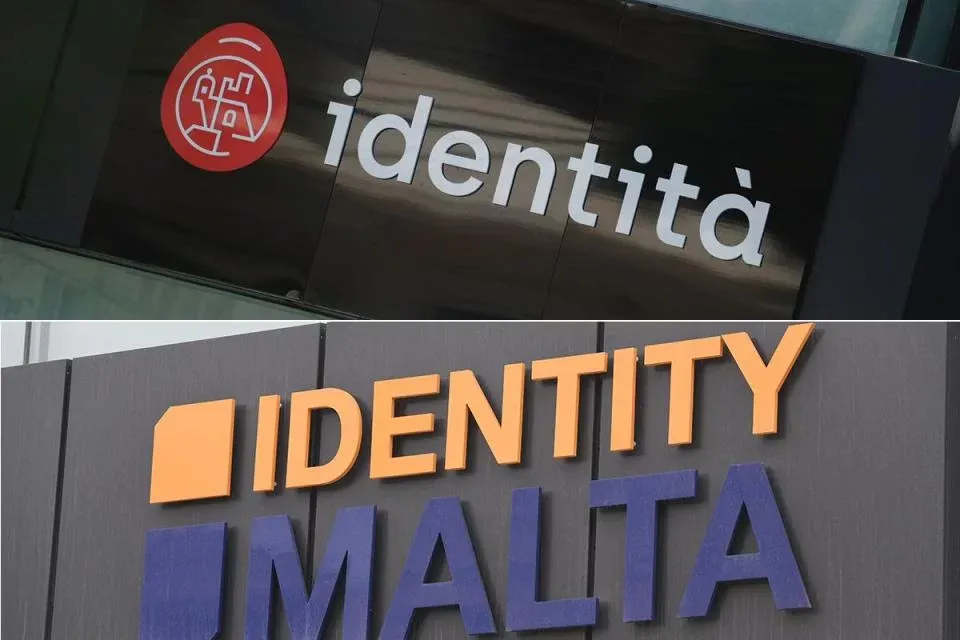
Under the current rules, Identità, the government agency that handles residence permits, asks long-term residence applicants to pass a Maltese language test at MQF Level 2 with a mark of at least 65 percent. On top of the language certificate, there is a separate integration and cultural orientation requirement. Both certificates generally have to be recent, issued within a year of your application, and a language course taken in another EU country does not count, because Maltese is specific to Malta.
The cultural and language course for third-country nationals was made a formal requirement for foreign workers seeking longer permits, according to Business Now, and it runs through licensed institutions rather than a single government classroom. The structure here changed in mid-2026, when the older "I Belong" stage-one courses were wound down and replaced, so if you are going through this process, treat the exact hours, fees and providers as a moving target and confirm them with Identità or an approved provider before you enrol. I am not going to quote a precise fee here that could be stale by the time you read it.
There is one more thing you should know before you spend a year getting to MQF Level 2 Maltese: the European Commission has opened an infringement case against Malta, arguing that requiring Maltese for long-term residence is disproportionate. Malta Today reported that the Commission issued a reasoned opinion and that the case could end up at the EU Court of Justice. The oddity the Commission points to is exactly the one in my table above: Malta demands Maltese for residence while accepting English for citizenship. If the Commission wins, the language requirement for long-term residence could be softened or dropped. Nothing has changed yet, so plan around the current rule, but watch this one if you are on the five-year clock. If settling permanently is your goal, it is worth reading our residence options overview alongside this, because the language step is only one piece of the permit.
Is Maltese hard to learn?
Harder than you might expect from a country this small and this English-friendly. Maltese is the only Semitic language written in the Latin alphabet and the only one that is an official EU language. Its grammatical skeleton descends from the Arabic spoken in medieval Sicily, which means verb patterns and plurals work in ways that will be unfamiliar if your previous languages were all European. Our guide to Maltese culture and history traces how that happened, and it is genuinely one of the more interesting linguistic stories in Europe.
The part that works in your favour is the vocabulary. Centuries of rule by the Knights, then the British, layered a huge amount of Italian and English onto that Semitic base. A lot of everyday words are borrowed and will look familiar the moment you see them written: skola (school), polizija (police), ospidal (hospital). So the words come quickly and the grammar comes slowly. Most learners find they can read a menu or a sign long before they can build a correct sentence.
Pronunciation has a few traps worth flagging early. The letter q is a glottal stop, a catch in the throat rather than a hard "k" sound, so qalb (heart) does not start like "kalb." The għ is mostly silent but stretches the vowel around it, and x is pronounced "sh," which is why the village of Xlendi sounds like "Shlendi." Get those three and you will stop embarrassing yourself on place names.
Useful Maltese words and phrases for everyday life
Even if you never take a course, a handful of words goes a long way. Maltese people switch to English the instant they hear your accent, but opening with Maltese changes the temperature of the interaction in a way that is hard to overstate. These are the ones I actually use:
| Maltese | Meaning | When |
|---|---|---|
| Bonġu | Good morning / hello | The single most useful word, say it everywhere |
| Bonswa | Good evening | After dark, both are borrowed from French |
| Grazzi | Thank you | Universal |
| Skużi | Excuse me / sorry | Shops, buses, squeezing past |
| Jekk jogħġbok | Please | Longer, but worth learning |
| Iva / Le | Yes / No | The basics |
| Kemm? | How much? | Markets and the pastizzi counter |
| Mela | Of course / so / right | A filler word Maltese use constantly, drop it in and you sound local |
| Saħħa | Cheers / bye / good health | Leaving, toasting, signing off |
That is maybe fifteen minutes of memorising, and it covers most of the moments where a word of Maltese actually lands: greeting your neighbour, thanking the bus driver, ordering at a kiosk. Nobody expects more from a foreigner, and getting these right earns more goodwill than halting full sentences would.
How to actually learn Maltese (and why Duolingo won't help)
Here is the frustration every learner hits first: the big apps do not cover Maltese. As of 2026, Maltese is not on Duolingo, Babbel, Rosetta Stone or Busuu. A language of under half a million native speakers simply is not a commercial priority for them, so the slick gamified option you would reach for with Spanish or French does not exist. You have to assemble your own toolkit from a smaller, scrappier set of resources.
For structured learning with a certificate at the end, the University of Malta is the credible route. It launched two interactive online "Maltese for Beginners" courses, at A0-A1 and A1-A2 levels, in June 2026, according to the University. These are the courses to look at if you need a recognised qualification, for example toward the MQF Level 2 certificate the residence process requires. Check the current intake and pricing on the University's own site, since those move each academic year.
One course to not sign up for by mistake: the government's "Maltese as a Foreign Language" MQF Level 1 and 2 programme on malteselivingabroad.gov.mt is cheap, around 35 EUR a course, but it is reserved for Maltese people living abroad, not for expats who have moved here. It comes up in searches constantly and it is not open to you.
For daily practice between lessons, apps do exist, they are just smaller names. Free options like Bluebird Languages' "Learn Maltese. Speak Maltese." give you daily spoken lessons but little grammar, which makes them a supplement rather than a backbone. Paid self-paced courses such as 17-Minute-Languages cover A1 to A2 for a one-time fee. Prices and feature sets on all of these shift, so verify on the official listing before you pay, and do not expect any of them to replace a teacher. The thing that moves the needle fastest for most people is a private tutor for conversation, which you can find on a platform like iTalki, because speaking is the skill no app teaches well.
If you want to understand the language seriously, pair any of the above with a good dictionary and a lot of listening. Maltese television and radio are everywhere, and once you have the sound of the language in your ear, the written form starts to click. Our education system guide is also worth a read if you have children, because they will likely pick up Maltese at school far faster than you will, and state schools teach in both languages.
So should you bother learning Maltese?
It depends entirely on your timeline. If you are here for a few years, learn the fifteen words above and stop there. The return on a serious course is social and emotional, not practical, because English already does everything you need, and your hours are better spent settling in than conjugating Semitic verbs. I would rather you nail bonġu and grazzi and use them daily than half-finish an A1 course.
If you are a non-EU national on the road to long-term residence, or you have decided Malta is home for good, that maths flips. You will need the MQF Level 2 certificate for the permit, so start early, go through the University of Malta or an approved provider, and build the integration course into your five-year plan rather than scrambling in year four. Keep half an eye on the EU infringement case while you do, because the rulebook you are studying toward may not survive it. Either way, the people who end up happiest here are the ones who learned enough Maltese to show they tried, whatever the law required of them.
Written byVincent Ventalon
French software engineer living in St Julian's and running his company from Malta. This site is what I learned on the way.More about me