Healthcare in Malta 2026: Who Gets It Free, Costs, Insurance
Updated
17 min read
In this article
Malta's public healthcare is free at the point of use for anyone registered in the system, and it is very good. EU residents get in through an S1 form and a Certificate of Entitlement, UK nationals through the post-Brexit reciprocal agreement, and non-EU arrivals need private insurance before they can even collect their residence permit. Here is how each route works, and what you pay when you go private instead.
I have helped enough friends land in Malta to know that healthcare is the thing that quietly worries people most before they move, and the thing they stop thinking about within a month of arriving. The care is high quality, everyone in a white coat speaks English, and the costs are low by Western European standards. The only fiddly part is the paperwork that decides which lane you are in, so that is where most of this guide goes.
Who gets free public healthcare in Malta
Before the detail, here is the whole entitlement question on one screen. Find your row, and the rest of the guide fills in the steps.
| Your status | Route to free public care | What you need first |
|---|---|---|
| EU/EEA resident, working or paying contributions | Certificate of Entitlement | Residency registration, then social security / S1 |
| EU/EEA pensioner or posted worker | Certificate of Entitlement funded by your home country | S1 form from your home institution |
| Short-term EU/EEA visitor | Necessary care only | Your home-country EHIC |
| UK national, resident | Same basis as Maltese nationals | S1 form, registered in Malta |
| UK national, visitor | Necessary care | UK GHIC |
| Non-EU / third-country national | Public access once employed and contributing | Private insurance (min 100,000 EUR) for the permit first |
The pattern to notice: almost everyone eventually gets to the same free public system, but the door you walk through and how long it takes depends entirely on your passport and your work status. Nobody is left without emergency cover, but the routine, planned care that makes daily life easy is what the registration unlocks.
Is healthcare in Malta actually any good?
Short answer: yes, and better than most new arrivals expect from a country this small. Malta runs a Beveridge-style system, tax-funded and free at the point of use, the same model as the British NHS or the systems in Spain and Italy. Care is delivered through one large acute hospital, a hospital on Gozo, and a network of local health centres, all publicly run.
You will see the old line that Malta ranks "fifth in the world" for healthcare. That comes from a World Health Organization league table published in 2000, so treat it as a piece of trivia rather than a current fact. The honest, present-day assessment is simpler: the clinical care is strong, the staff are well trained, and the buildings are modern. Where the system strains is the same place every free system strains, non-urgent waiting lists, which is exactly the gap private care fills.
The single best feature for an expat has nothing to do with league tables. English is an official language of Malta, so every consultation, every sign, every discharge letter and every phone call happens in English. After the stress of navigating a hospital in a language you half-speak, that alone takes a lot of the fear out of getting sick here.
How EU citizens get free public healthcare
If you are an EU or EEA national, you have two very different situations depending on how long you are staying.
For a short visit, your own country's European Health Insurance Card is all you need. It covers necessary medical care during a temporary stay, so a cut that needs stitches or a chest infection that needs a doctor is handled at public rates, usually free. The EHIC is not a substitute for travel insurance and it will not fly you home, but for medical treatment on the ground it does the job.
For a proper move, the mechanism is the S1 form and the Certificate of Entitlement. Once you have completed your residency registration, which happens three months after you arrive, you register your S1 with the Entitlement Unit and receive a Certificate of Entitlement that gives you access to public healthcare on exactly the same basis as a Maltese national. If you are working in Malta and paying social security contributions, that contribution record is itself your route in; if you are a pensioner or a posted worker still tied to another EU country, your home institution issues the S1 and effectively funds your care here.
The practical trap is the gap. Between landing and holding that certificate you can easily spend a few months only partially covered, and any specialist you see privately in that window comes out of your own pocket. My advice to every EU arrival is the same: start the residency paperwork the week you arrive, not the month you get around to it, because the healthcare entitlement sits at the end of that chain. Our Malta residence card guide walks through the registration itself, and the moving to Malta checklist sequences it against everything else you need to sort.
UK citizens and healthcare in Malta after Brexit
Brexit made this more complicated on paper and barely different in practice, because the UK and Malta kept a reciprocal healthcare agreement. According to the UK government's own guidance, UK nationals have three main routes.
If you are visiting, studying or posted here temporarily, a UK Global Health Insurance Card (GHIC), the post-Brexit replacement for the old EHIC, covers necessary treatment at the same cost a local pays, which usually means free. If you are moving to Malta to live, you register an S1 form on the Maltese system and you and your dependants are then entitled to care on the same basis as a Maltese citizen. UK pensioners are the clearest winners here: get an S1 from the UK, register it, and your Maltese healthcare is funded by the UK, which is one of the quiet reasons Malta remains popular for retirement.
There is also a fallback. If you have no other entitlement, an RHA Entitlement Card exists specifically to give you access to free state healthcare in Malta, and our dedicated RHA card guide walks through exactly who qualifies and how to apply. Between the GHIC, the S1 and the RHA card, very few UK nationals end up uncovered, but you do have to pick the right document for your situation and register it properly.
Non-EU and third-country nationals: insurance comes first
This is the group with the strictest rules, and the one most likely to get caught out. If you are a non-EU national, private health insurance is not optional, it is a condition of your residence permit. You cannot skip it and sort healthcare out later.
Since August 2024, Identita, Malta's identity and residence agency, requires a policy with a minimum of 100,000 EUR of cover for most employment and family applications. The policy has to cover medical treatment including hospitalisation in Malta and, where needed, elsewhere in the EU, and it must be valid for the first year of your permit. Applications with weaker cover than that get rejected outright, so buy the right policy before you file, not after.
The good news is that this is a bridge, not a permanent expense. Once you are living here, working and paying into Malta's social security system, you build the same entitlement to public healthcare that everyone else has. Plenty of non-EU expats keep a private policy anyway for the speed and the comfort, but legally the mandatory phase is the early one, while you are establishing yourself. If you are coming from the United States specifically, the tax and insurance mechanics are worth reading alongside our guide to moving to Malta from the USA.
What public healthcare actually covers
Once you hold your Certificate of Entitlement, the public system is broad. It covers GP consultations, hospital stays and surgery, accident and emergency, specialist appointments on referral, maternity care from pregnancy through birth, childhood vaccinations and check-ups, mental health services, and physiotherapy and rehabilitation. Routine dental treatment is mostly private, but dental emergencies are handled publicly.
The one area worth understanding properly is medicines, because Malta does this differently from a lot of countries. Prescriptions are not universally free, but there are two big schemes that make them free for the people who need them most, run through the Pharmacy of Your Choice (POYC) national service. More than 170,000 people, roughly a third of the population, collect free medicines this way.
The first scheme is condition-based. If you have one of a defined list of chronic conditions, from diabetes to asthma to a cardiac problem, you qualify for free medication for that condition regardless of your income. The paperwork for this is the yellow Schedule V document. The second scheme is means-tested: lower-income residents qualify for a pink card that makes a wider range of medicines free. Either way, you register with a community pharmacy of your choice near home and collect your repeat medication there, typically every 56 days. If none of that applies to you, you simply pay for prescriptions at a pharmacy, and Maltese pharmacy prices are reasonable.
Where you actually go: hospitals and health centres
Malta's public map is easy to learn because there is not much of it, which is part of the charm.
Mater Dei Hospital in Msida is the main event, the country's large public teaching hospital and one of the bigger medical buildings in Europe. It handles the full range of inpatient and outpatient care, the accident and emergency department, and the specialist services, so if something serious happens on the main island, this is where you end up. Save its switchboard, +356 2545 0000, in your phone.
Gozo General Hospital in Victoria is the only hospital on Gozo, with around 270 beds, and it is the hub for anyone living on the smaller island. It handles most needs locally, and the more complex cases transfer to Mater Dei. If you are weighing up island life, our living in Gozo guide goes deeper on how healthcare feels day to day out there.
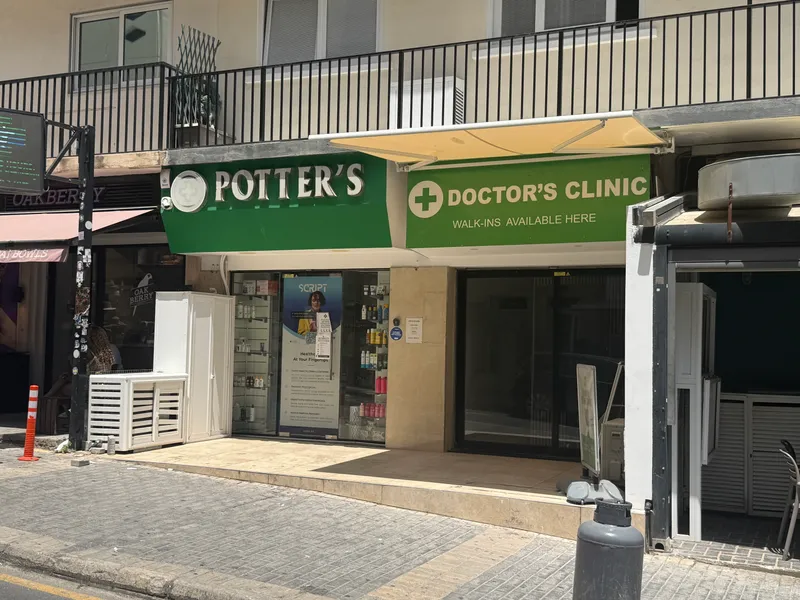
One thing that confuses new arrivals from the UK: there is no single-GP registration list here. You do not sign up with one family doctor who becomes your gatekeeper. For public care you use your local health centre, where you see whichever doctor is on; for private care you pick any GP you like and pay per visit, usually around 15 to 30 EUR. Most expats end up doing both, the health centre for anything that leads to a referral or a prescription, a private GP down the road for a quick same-day appointment. Finding a private GP you trust and sticking with them gives you the continuity the public system does not build in.
For everything that is not hospital-level, you use a health centre. These are the government's local clinics, spread across the islands, and three of them, Mosta, Floriana and Paola, keep a doctor on site around the clock. Beyond the GP service they run a wide set of clinics: antenatal and postnatal, well-baby checks, diabetes, ophthalmic, psychiatric, podiatry, physiotherapy and speech therapy among them. The practical move is to register with the health centre closest to where you live, because it becomes your first port of call for most routine things. If you are still deciding on an area, our guide to where to live in Malta is worth a look, and you can see the main hospitals and clinics plotted on our expat services map.
Private healthcare in Malta and what it costs
Even though the public system is free, a lot of expats end up paying privately, and it is usually a rational choice rather than a snobbish one. The reason is almost always the same: a non-urgent scan or a specialist appointment that carries a long public waiting list can be booked privately within days, often the same week, for a price that would look like a rounding error back in London or New York.
Malta has three private hospitals on the main island, the largest being Saint James Hospital, alongside St Thomas Hospital and the DaVinci group of clinics. They cover essentially every specialty, staff speak English, and many of the same consultants who work in the public system also hold private clinics.
Here is what private care roughly costs in 2026. Treat these as ballpark figures that move with the provider and the specialty, not fixed quotes.
| Service | Typical private cost (2026) |
|---|---|
| GP consultation | 15 to 30 EUR (walk-in clinics can run higher) |
| Specialist consultation | 50 to 120 EUR depending on field |
| MRI scan | around 150 to 200 EUR |
| Private hospital room | from around 200 EUR per night |
| Blood test panel | varies, often under 50 EUR for a basic set |
To put that in context, a private MRI at roughly 150 to 200 EUR is a fraction of what the same scan costs privately in the UK or the US, and you can usually have it done the same week. That combination, low prices and short waits, is the whole case for going private on the non-urgent stuff while leaning on the public system for emergencies and anything major. You do not have to pick a side; most people I know here mix the two without thinking about it.
Having a baby, dentists and mental health
Three areas trip people up because they do not follow the simple free-public rule, so they are worth spelling out.
Maternity is the good surprise. Public maternity care runs through Mater Dei, from antenatal clinics at your health centre through to the delivery, and for an entitled resident it is free. Plenty of expats have their babies entirely on the public side and rate the care highly. If you want a named consultant and continuity through the pregnancy, the private hospitals sell obstetric packages, but you are paying for the extras rather than for better clinical safety.
Dental is the opposite: mostly private, and you should budget for it. The public system, through the Department of Dental Surgery at Mater Dei and the health centres, focuses on emergencies and basic treatment for entitled residents, with wider free treatment for holders of the pink Schedule III form or diabetics. Everything routine you pay for. Private prices are reasonable by European standards: expect roughly 20 EUR for a check-up, around 40 to 80 EUR for a filling, and 50 to 70 EUR for an extraction, based on the published price lists of clinics like The Dental Practice. Find a dentist you like early rather than when a tooth is already throbbing.
Mental health has improved and is easier to reach than a lot of newcomers assume. The public route starts at your health centre or GP, who can refer you into the mental health services, with inpatient psychiatric care at Mount Carmel Hospital and a liaison team at Mater Dei. On the private side there is a large pool of English-speaking psychologists and therapists, which matters because therapy is one area where doing it in your own language is worth paying for. If you are moving alone, line this up before you need it.
Do you need health insurance in Malta?
It depends entirely on which group you are in, and this is where people either overspend or leave a dangerous gap.
If you are a non-EU national, the question is settled for you: you need a compliant policy with at least 100,000 EUR of cover to get your permit, full stop. If you are an EU national, you are not strictly required to hold private insurance, but many people buy it for the first stretch as a bridge before their public entitlement clears, or keep it long-term purely for the speed of private care. If you are only visiting, your EHIC or GHIC plus ordinary travel insurance covers the essentials, though make sure the travel policy includes medical evacuation, because that is the one bill that can be genuinely frightening.
For long-term private cover, international policies from the big names typically run anywhere from several hundred to a few thousand euros a year depending on your age, the level of cover and whether you want worldwide protection. Cheaper local Maltese policies exist for a few hundred euros a year and cover the basics if you mainly want to jump public waiting lists rather than insure against catastrophe. Whatever you choose, read what it covers rather than the headline price; a cheap policy that excludes the thing you are most likely to need is not a saving. Our dedicated guide to private health insurance in Malta breaks down the permit rules, the local-versus-international choice and what policies actually cost. You will want a local bank account to set up the payments cleanly, which our personal banking guide covers.
Emergencies: what to do and who pays
The number to know is 112. It is the single European emergency line and it works from any phone for ambulance, police or fire. A state ambulance dispatched through 112 is free, and this is the important part, emergency treatment is provided first and the paperwork is sorted out afterwards. Nobody at the door of Mater Dei asks for a card before they stabilise you.
Who eventually pays depends on your status, and this is where the earlier fabricated-free-for-everyone myth needs correcting. EU and EEA visitors with an EHIC, UK visitors with a GHIC, and anyone registered in the public system are covered for that emergency treatment. A non-EU visitor without a reciprocal agreement, an American, Canadian or Australian tourist for instance, will still be treated without hesitation, but can be billed for it afterwards. That gap is exactly why travel or private health insurance matters when you are not yet inside the public system. Get the treatment, keep every document, and let the insurer settle up.
For anything serious on the main island you go to Mater Dei; on Gozo you go to Gozo General. Programme 112 into your phone now, and add your nearest health centre's number while you are at it, because a lot of what feels like an emergency at 9pm is often a health-centre visit in the morning.
Registering for healthcare in Malta: the steps
Strip away the detail and the sequence is short. In your first week, find and note your nearest health centre and a community pharmacy. In your first month, if you are staying long-term, start your residency paperwork, because the healthcare entitlement hangs off the end of it and there is no reason to delay. From three months after arrival you can complete your registration with the Entitlement Unit and, with your S1 or contribution record in hand, receive your Certificate of Entitlement.
If you get stuck, the Entitlement Unit sits at the former St Luke's Hospital site in G'Mangia and answers on entitlement.health@gov.mt or +356 2595 2400. Keep copies of everything, your EHIC or GHIC, your S1, your insurance certificate and any medical records, because Malta expects you to hold your own paperwork rather than assuming a central system has it. Budgeting the whole move, healthcare included, is easier against our Malta cost of living guide, and families weighing schooling alongside healthcare will want the education system guide too.
So is healthcare in Malta good enough to move for?
For most people, comfortably yes. You get free, high-quality public care once you are registered, genuinely cheap and fast private care for the times you do not want to wait, and every bit of it delivered in English. The clinical standard is high, Mater Dei is a serious modern hospital, and the medicines schemes quietly take the cost of chronic conditions off the table for the people who need that most.
It is not flawless, and I would not pretend otherwise. Non-urgent waiting lists in the public system are real, which is precisely why so many residents keep one foot in the private lane. The registration paperwork is a slog if you leave it late, and non-EU arrivals have to fund insurance up front before the free system opens to them. But weighed against what you would pay, and wait, in a lot of other countries, Malta's healthcare is a genuine point in the island's favour rather than a compromise you tolerate. Sort the paperwork early, keep a sensible insurance policy for the gaps, and it mostly becomes something you stop worrying about.
Written byVincent Ventalon
French software engineer living in St Julian's and running his company from Malta. This site is what I learned on the way.More about me