About Malta: Key Facts for Future Expats (2026)
19 min read
In this article
I remember my first flight into Malta. It was mid-October, the plane banked over the coastline, and I saw this tiny archipelago glowing gold in the late afternoon sun. Honey-colored limestone buildings, deep blue water, and barely a cloud in the sky. My first thought was: "This is supposed to be Europe?"
Five years later, I still get that feeling every time I come back from a trip abroad. Malta has a way of catching you off guard, whether it's the 300 days of sunshine, the fact that almost everyone speaks English, or the weird reality that you can drive across the entire country in under an hour but never run out of things to discover.
If you're reading this, you're probably considering a move to Malta, or at least curious about what life is actually like on these islands. So let me give you the full picture. Not the tourist brochure version, but the real deal from someone who lives here.
Where Exactly Is Malta?
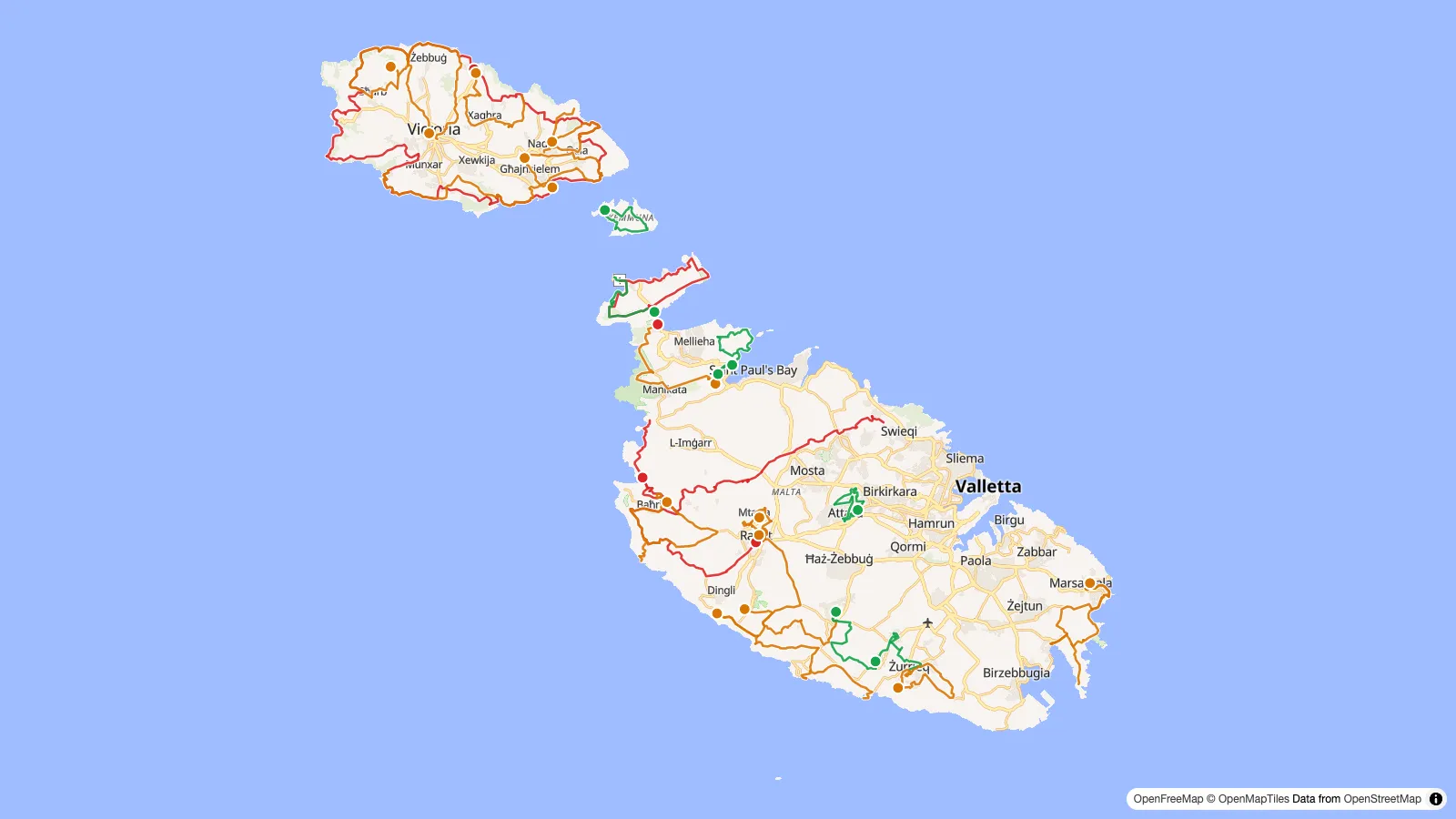
Malta sits right in the middle of the Mediterranean Sea, about 93 kilometers south of Sicily and 284 kilometers east of Tunisia. It's genuinely the crossroads of Europe and North Africa, which explains a lot about its culture, its food, and its history.
The country is an archipelago made up of three inhabited islands:
- Malta (the main island): 246 square kilometers, where most people live and work
- Gozo (Għawdex in Maltese): 67 square kilometers, quieter and more rural, connected by a regular ferry service
- Comino (Kemmuna): Tiny at just 3.5 square kilometers, mostly uninhabited, famous for the Blue Lagoon
To put the size in perspective, the entire country is smaller than most major cities. Malta is roughly the size of the Isle of Wight or about twice the size of Liechtenstein. You can drive from the southern tip to the northern point of Malta island in about 45 minutes (traffic permitting, and trust me, that's a big caveat).
The strategic location in the Mediterranean has shaped everything about Malta. It's within a 3-hour direct flight from virtually every major European capital. London is about 3 hours, Paris 2.5 hours, Frankfurt 2.5 hours, and Rome just over an hour. That proximity to mainland Europe makes Malta incredibly well-connected despite being an island.
A History That Reads Like a Novel
If you're even remotely interested in history, Malta will blow your mind. The islands have been continuously inhabited for over 7,000 years, and pretty much every major Mediterranean civilization has left its mark here.
The Prehistoric Temples
Malta is home to the Ħaġar Qim and Mnajdra temples, which are older than the Egyptian pyramids and Stonehenge. Let that sink in for a second. These megalithic structures date back to 3600-3200 BC, and you can just... walk around them on a Sunday afternoon. I've lived here for years and it still amazes me that I can casually visit buildings that are over 5,500 years old.
The Parade of Empires
After the temple builders, Malta was ruled by the Phoenicians, Romans, Byzantines, Arabs, Normans, the Spanish Crown, and more. Each left traces that you can still see today. The Arabic influence shows up in the Maltese language (more on that later). The Norman and Spanish periods shaped the architecture. And then came the big one.
The Knights of St. John
In 1530, the Knights Hospitaller of St. John received Malta from Emperor Charles V. These guys essentially transformed the islands from a Mediterranean backwater into one of the most fortified places on earth. They built Valletta, the capital city, after the famous Great Siege of 1565, when a tiny Maltese and Knights' garrison held off the Ottoman Empire against incredible odds.
Walking through Valletta today, you're literally walking through the vision of the Knights. St. John's Co-Cathedral alone is worth the trip. The exterior looks plain, but inside it's one of the most jaw-droppingly ornate baroque churches in the world, with a floor made of marble tombstones and a Caravaggio painting hanging casually on the wall.
The British Period and Independence
Britain took control of Malta in 1800 and held it until independence in 1964. Malta became a republic in 1974. The British legacy is everywhere: they drive on the left side of the road, the legal system has strong British influences, red telephone boxes pop up in random villages, and English is one of the two official languages.
During World War II, Malta was one of the most heavily bombed places on earth. The entire island was awarded the George Cross for bravery, which now appears on the Maltese flag. You can still see remnants of war shelters and bomb damage in some areas, a reminder that this small island played an outsized role in major world events.
The Climate: Yes, It Really Is That Good
This is usually what seals the deal for most expats. Malta has a Mediterranean climate with hot, dry summers and mild, wet winters. Here's what that looks like in practice:
Summer (June to September): Temperatures hover between 28-35°C, sometimes pushing above 38°C in August. It barely rains at all. The sea temperature reaches a gorgeous 26°C by August, and stays warm well into October. You'll essentially live in shorts and flip-flops for about five months of the year.
Winter (December to February): "Winter" in Malta means temperatures around 12-16°C during the day. It rains, sometimes heavily, but the cold spells rarely last more than a few days. Snow? I've never seen it here, and neither has anyone I know. There might be the occasional frost on the highest points of the island, but that's about it. Most winters, I'm still eating lunch outside in January.
Spring and Autumn: These are arguably the best months. March through May and October through November offer warm sunny days without the scorching summer heat. The sea is still swimmable in October and sometimes into November.
The one thing you should know: Malta gets about 3,000 hours of sunshine per year, making it one of the sunniest places in Europe. Coming from northern Europe, this alone is life-changing. Seasonal depression? Basically nonexistent.
The trade-off? Summers are genuinely hot and humid, and there's very little shade since the islands are quite arid. Air conditioning isn't a luxury here; it's a necessity from June to September.
Languages: The Maltese Puzzle
This is one of the most fascinating things about Malta. The country has two official languages: Maltese and English.
Maltese (Malti) is the national language and the only Semitic language written in Latin script. It's rooted in Arabic (specifically Siculo-Arabic), with massive influences from Italian, Sicilian, French, and English. When you first hear Maltese, your brain tries to categorize it and fails. It sounds like Arabic mixed with Italian, with random English words thrown in.
Here's the good news for expats: you don't need to learn Maltese to live here comfortably. Almost everyone speaks English, it's an official language, all government services are available in English, and business is largely conducted in English. Road signs, menus, official documents, your lease agreement, all bilingual or in English.
That said, learning some basic Maltese phrases goes a long way with locals. Even a simple "bonġu" (good morning) or "grazzi" (thank you) will earn you smiles. Maltese people genuinely appreciate the effort.
Italian is also widely understood, especially by the older generation who grew up watching Italian television. Many Maltese people switch effortlessly between Maltese, English, and Italian in the same conversation. It's genuinely impressive.
Population and Demographics
Malta has a population of approximately 542,000 people (as of 2025), making it the most densely populated country in the EU. And you feel it. With about 1,600 people per square kilometer, the islands can feel surprisingly crowded, especially around the central and eastern areas.
The population has grown significantly over the past decade, largely due to immigration. Malta has become a magnet for foreign workers, and the expat community is massive relative to the country's size. You'll find significant communities of British, Italian, Serbian, Filipino, and Indian residents, along with growing numbers of people from across the EU and beyond.
About 20-25% of the workforce is foreign, which gives Malta a surprisingly international feel for such a small place. In areas like Sliema, St. Julian's, and Gzira, you'll hear more English and other languages than Maltese on any given day.
The flip side of this rapid growth is that infrastructure has struggled to keep up. Traffic congestion is a real issue, construction is everywhere, and housing demand has pushed rental prices up significantly. It's something every expat should factor into their decision.
The Economy: Small Island, Big Ambitions
Malta's economy has been one of the strongest performers in the EU over the past decade. GDP growth has consistently outpaced the eurozone average, unemployment hovers around 3-4%, and the country has successfully diversified from its historical reliance on tourism and shipbuilding into higher-value sectors.
Key Economic Sectors
iGaming and Online Gambling Malta is the world capital of online gambling regulation. The Malta Gaming Authority (MGA) licenses hundreds of companies, and the iGaming sector accounts for roughly 12% of GDP. This industry alone has attracted thousands of young professionals from across Europe. If you work in tech, marketing, or compliance, there's a good chance your future employer in Malta is an iGaming company.
Financial Services Malta has positioned itself as a financial services hub, particularly for fund management, insurance, and fintech. The regulatory framework is EU-compliant, and the country has attracted numerous banks, payment institutions, and financial technology firms.
Tourism Tourism remains a cornerstone of the Maltese economy, attracting over 3 million visitors per year (roughly six times the population). The sector has evolved beyond sun-and-sea tourism to include cultural tourism, diving, language schools, and events.
Technology and Innovation Malta made a bold bet on blockchain and distributed ledger technology back in 2018, earning the nickname "Blockchain Island." While the initial hype has cooled, the tech sector continues to grow, with a focus on AI, fintech, and digital services.
Film and Creative Industries Malta's dramatic landscapes and Mediterranean light have made it a popular filming location. Productions like Game of Thrones, Gladiator, Troy, and Assassin's Creed have all filmed here. The Malta Film Commission offers attractive incentives for productions.
Maritime and Aviation The Malta flag registry is one of the largest in Europe, and the country has a growing aviation sector with aircraft registration and maintenance services.
The Tax System
One of the key reasons Malta attracts businesses and individuals is its tax framework. Malta has a corporate tax rate of 35%, but the effective tax rate for foreign shareholders can be reduced to 5% through the refundable tax credit system. This system, which is fully EU-compliant, has been a major draw for international businesses.
For individuals, Malta offers several attractive programs, including the Global Residence Programme, the Malta Retirement Programme, and the Nomad Residence Permit for remote workers. If you're interested in the tax side of things, check out our detailed guides on corporate taxation and personal taxation, or see how these regimes stack up in the Malta vs other countries comparison.
Currency
Malta adopted the euro (€) in 2008, which makes life infinitely easier for EU citizens and removes currency exchange headaches. Before that, the Maltese used the Maltese lira (Lm), which some older locals still reference nostalgically.
EU Membership and Political System
Malta joined the European Union in 2004 and adopted the euro in 2008. EU membership has been transformative for the country, opening up markets, bringing in structural funds, and connecting Malta to the single market.
The political system is a parliamentary republic based on the Westminster model (thanks to the British). The president is the head of state (largely ceremonial), while the prime minister leads the government. Malta has a two-party system dominated by the Partit Laburista (Labour) and the Partit Nazzjonalista (Nationalist), and politics here is... passionate, to put it mildly. Maltese people take their political affiliations very seriously, almost like supporting a football team.
Malta is also a member of the Schengen Area, which means free movement across most of Europe without passport controls. For EU citizens, this makes Malta incredibly easy to move to. For non-EU citizens, Malta offers several residence programmes worth exploring.
Quality of Life: The Real Reason People Stay
Here's the thing about Malta that's hard to explain until you've lived it: the quality of life is genuinely excellent, but not in the way you might expect. It's not about luxury or polish. It's about the pace of life, the weather, the social culture, and the fact that you're never more than 20 minutes from the sea.
Safety
Malta consistently ranks as one of the safest countries in Europe. Violent crime is extremely rare. You can walk around at 2 AM without feeling unsafe. Women walk home alone at night. Kids play in the streets. It's the kind of safety that people from larger European cities find almost surreal.
Healthcare
Malta has a dual public-private healthcare system. The public system, led by Mater Dei Hospital, provides free healthcare to residents. The facility is modern (opened in 2007) and generally well-regarded, though waiting times for non-urgent procedures can be long.
Most expats opt for private health insurance, which gives access to private clinics and shorter wait times. Private healthcare in Malta is relatively affordable compared to Western European standards. A consultation with a specialist typically costs €50-80, and comprehensive health insurance runs around €100-200 per month depending on age and coverage.
Education
Malta has both public and private schooling options. The public system is free and operates in both Maltese and English. For expat families, there are several international schools, including Verdala International School and QSI International School, which follow international curricula (IB, British, American).
The University of Malta is the main higher education institution, offering free tuition to EU nationals. It has a beautiful campus in Msida and a growing reputation, particularly in fields like Mediterranean studies, marine biology, and EU law.
Cost of Living
Malta is generally more affordable than Western Europe but more expensive than Eastern Europe. It sits comfortably in the middle, which is part of its appeal. Housing is the biggest expense, particularly in popular expat areas like Sliema and St. Julian's. For a detailed breakdown, check our comprehensive cost of living guide.
The basics: a meal at a local restaurant costs €10-15, a beer is around €3-4, groceries are comparable to Southern European prices, and public transport is free for residents who hold a personalised Tallinja card (visitors pay €2.00 per trip in winter and €2.50 in summer).
Social Life and Culture
Maltese culture is warm, social, and deeply rooted in family and community. The village festa (religious festival) is the heart of Maltese social life, with each village celebrating its patron saint with fireworks, band marches, street decorations, and enough food to feed an army. During summer, there's a festa almost every weekend somewhere on the island.
The Maltese are generally friendly and welcoming to foreigners, though like any small community, it takes time to build deeper relationships. The expat community is large and active, with regular meetups, sports leagues, and social events. You won't struggle to meet people.
Dining out is a big part of Maltese life. The food scene has exploded in recent years, with everything from traditional Maltese rabbit stew (fenkata) and pastizzi (the beloved ricotta-filled pastry that costs about €0.50) to high-end Mediterranean restaurants. Valletta in particular has become a serious foodie destination.
Infrastructure and Getting Around
Transport
Let's get this out of the way: traffic in Malta is a nightmare. The islands are small, the roads are narrow, the population has grown faster than the road network, and everyone drives everywhere. Rush hour in the Msida-Sliema-St. Julian's corridor is genuinely painful.
That said, the situation is slowly improving. The bus network covers the entire island and, since October 2022, is free for residents with a personalised Tallinja card (visitors pay €2.00-2.50 a trip). Bolt and other ride-hailing apps operate here. E-scooters have appeared in recent years. And many expats just walk or cycle in the central areas.
There's also a fast ferry service between Valletta and Sliema/the Three Cities, which is a scenic and traffic-free way to commute if you live and work near the waterfront.
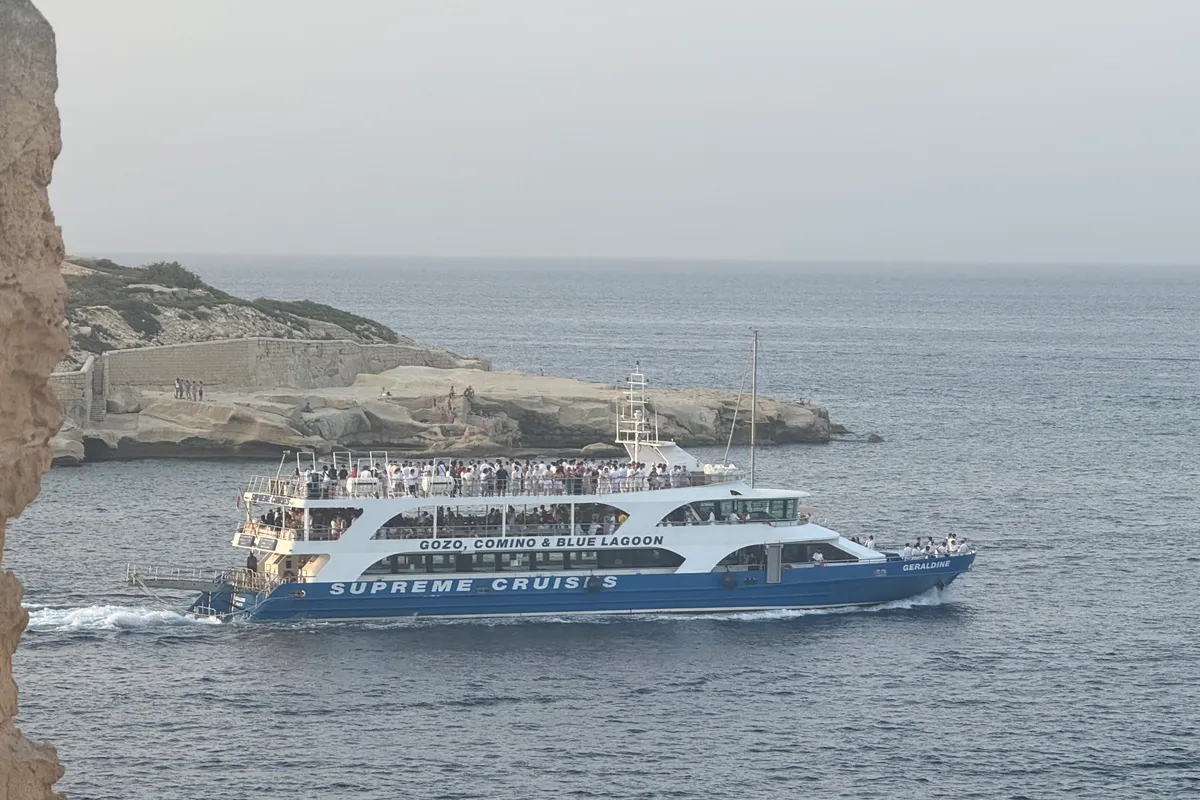
Between Malta and Gozo, the Gozo Channel ferry runs frequently (every 45 minutes to an hour), and the crossing takes about 25 minutes. There's also a fast ferry from Valletta to Gozo that takes about 45 minutes.
No trains, no metro, no tram. It's buses, cars, ferries, and your own two feet.
Internet and Connectivity
Internet infrastructure in Malta is solid. Fiber optic is widely available in urban areas, with speeds up to 1 Gbps from providers like Melita and GO. Mobile coverage is excellent across both islands. For a small island, the connectivity is genuinely world-class, which is one reason it's attracted so many remote workers and digital businesses.
For a full rundown on telecom options, see our guide to phone and internet providers.
Malta International Airport
Malta International Airport (MLA) is the only airport and serves as the gateway to the islands. Despite the country's small size, the airport has direct connections to over 100 destinations across Europe, North Africa, and the Middle East. Airlines like Ryanair, Wizz Air, and Air Malta (now KM Malta Airlines) offer frequent and affordable flights.
The airport is conveniently located in Luqa, roughly in the center of Malta, so it's reachable from anywhere on the island in 20-30 minutes (outside of rush hour).
The Maltese Lifestyle: What Daily Life Actually Looks Like
Living in Malta settles into a rhythm that's hard to describe until you experience it. Here's what a typical week might look like:
Morning: You grab a pastizz and a coffee from the corner bakery for under €2. The sun is already warm by 8 AM in summer. You commute to work, ideally avoiding the Sliema-Msida bottleneck.
Lunch: Many people eat out or grab takeaway. The Maltese lunch break is still sacred in some sectors, and you'll find restaurants packed between 12:30 and 14:00. A plate of the day at a local restaurant runs about €8-12.
After work: In summer, you head straight to the beach or the nearest rocky swimming spot. Malta's coastline is dotted with incredible swimming spots. In winter, you might meet friends for a drink on the Sliema promenade or explore a new restaurant in Valletta.
Weekends: This is where Malta shines. A Saturday might include a morning swim at Golden Bay, lunch at a Marsaxlokk fish restaurant, and an evening exploring Mdina (the old capital, absolutely gorgeous after dark). Sunday is traditionally family day, and many Maltese families gather for a big lunch. As an expat, you'll likely fill weekends with boat trips to Comino, hiking in Gozo, visiting historical sites, or just enjoying a long brunch with friends.
The pace of life is noticeably slower than in major European cities. Things don't always happen on time. Government offices close at inconvenient hours. The plumber who promised to come on Tuesday might show up on Thursday. But there's a trade-off: you're less stressed, you spend more time outdoors, and the general attitude toward life is refreshingly relaxed.
The Challenges: Let's Be Honest
No place is perfect, and Malta has its share of issues that you should know about before moving:
Construction and development. Malta is in the middle of a construction boom that many residents find excessive. Cranes dominate the skyline in many areas, and the noise can be relentless. Preservation of traditional architecture is a growing concern.
Traffic congestion. Already mentioned, but it bears repeating. Traffic is probably the number one complaint among both locals and expats. Infrastructure hasn't kept pace with population growth.
Size. Malta is small. Really small. Some people love it; others feel claustrophobic after a while. If you need wide open spaces and mountains, this isn't your place. The flip side is that everything is close, and you can escape to Sicily, Gozo, or mainland Europe easily.
Bureaucracy. Government processes can be slow and frustrating. Getting a residence card, opening a bank account, or dealing with utilities sometimes requires more patience than you thought you had. Things are improving, but "Maltese time" is a real phenomenon.
Summer heat. July and August are brutally hot and humid. If you don't handle heat well, these months can be tough. Many Maltese actually take holidays during August to escape to cooler destinations.
Environmental concerns. Water scarcity, waste management, and over-development are ongoing challenges. Malta relies heavily on reverse osmosis for drinking water, and recycling rates, while improving, still lag behind northern European standards.
Why Expats Choose Malta (And Why They Stay)
Despite the challenges, there's a reason Malta has one of the fastest-growing expat communities in Europe. When I talk to other expats about why they moved here and why they stay, the same themes come up:
- The weather. It sounds simple, but 300 days of sunshine genuinely transforms your quality of life.
- English-speaking. No language barrier from day one. This is massive.
- Safety. Being able to walk anywhere, anytime, without worry.
- The tax framework. For business owners and remote workers, Malta's tax system is genuinely attractive.
- EU membership and Schengen. Full EU rights and easy travel across Europe.
- The social scene. Malta is small enough that you build a community quickly. The expat network is strong.
- The food, the sea, the history. It's just a beautiful place to live.
- Proximity to everything. You're 2-3 hours from anywhere in Europe, but you live on a Mediterranean island.
Getting Started: Your Next Steps
If you're seriously considering a move to Malta, here are some practical starting points:
-
Understand the visa situation. EU citizens have the right to live and work in Malta. Non-EU citizens should explore the residence programmes and the Nomad Residence Permit for remote workers.
-
Figure out where to live. Location matters enormously in Malta. Check out our guide on where to live in Malta for an honest neighbourhood-by-neighbourhood breakdown.
-
Plan your finances. Understand the cost of living and the tax implications of your move.
-
Sort out banking. Opening a bank account in Malta can be a process, so start early.
-
Connect with the community. Join expat Facebook groups, attend meetups, and start building your network before you arrive.
Malta isn't for everyone. But for those who find their fit here, it's hard to imagine living anywhere else. The combination of Mediterranean lifestyle, English language, EU membership, economic opportunity, and sheer beauty makes it unique in Europe.
And honestly? That moment when you're sitting at a harbourside restaurant in Valletta, watching the sun set over the Grand Harbour with a glass of local wine in hand, and you realize this is just a regular Tuesday evening... that never gets old.
Written byVincent Ventalon
French software engineer living in St Julian's and running his company from Malta. This site is what I learned on the way.More about me