Malta Digital Nomad Visa 2026: €42,000 Rule, 10% Tax, Costs
11 min read

In this article
Malta works for digital nomads in two ways. Non-EU remote workers apply for the Nomad Residence Permit: prove €42,000 a year, pay no tax the first year then a flat 10%, and stay up to four years. EU citizens skip all of that and just register as residents. Either way you get year-round sun, English as an official language, and fibre fast enough to never think about it.
Here is what the Nomad Residence Permit demands of you, before the detail:
| Nomad Residence Permit | 2026 detail |
|---|---|
| Who it is for | Non-EU / non-EEA / non-Swiss nationals only |
| Minimum income | €42,000 gross per year (~€3,500/month), from remote work |
| Application fee | €300 per applicant + €100 for the residence card |
| Duration | 1 year, renewable up to 3 times (4 years max) |
| Tax on remote income | 0% for the first 12 months, then flat 10% |
| Processing time | About 30 working days from proof of funds |
| Administered by | Residency Malta Agency |
What is the Malta Nomad Residence Permit?
The Nomad Residence Permit is Malta's official visa for people who work remotely for companies or clients based outside Malta. It launched in 2021 and it does one specific job: it lets a non-EU national live on the island legally while keeping their foreign income and their foreign employer.
It is not a work permit for the local job market. You cannot use it to take a job with a Maltese company. The whole point is that your work, and your paycheck, stay abroad while your sofa moves to Sliema.
Three profiles qualify, according to the Residency Malta eligibility page: employees of a foreign company, partners or shareholders in a foreign company, or freelancers with a client base outside Malta. In all three cases the work has to be doable over the internet, which for most knowledge workers is a formality.
The income requirement
You need to show a minimum gross income of €42,000 a year, which works out to about €3,500 a month. Malta raised this from €32,400 on 1 April 2024 to keep pace with rents and the cost of living, so a lot of older guides still quote the lower figure. If you happened to apply before that date, you keep the €32,400 threshold on renewal, but every new applicant now works to €42,000.
One trap catches people: the income has to be active. Money coming from savings, an investment portfolio or an inheritance does not count toward the threshold, no matter how large. Residency Malta wants to see an ongoing stream from actual remote work, backed by contracts, invoices or payslips.
Fees and processing
The application fee is €300 per applicant, with another €100 for the residence card once you are approved. Family members can be added (spouse, children, and in some cases dependent parents), each paying the same administrative fee. Budget for private health insurance covering Malta on top, because proof of cover is mandatory and checked, and the policy has to meet the Residency Malta Agency's 100,000 EUR minimum standard rather than any cheap travel plan.
Processing runs to roughly 30 working days from the point Residency Malta confirms your proof of funds, which in practice means six to eight weeks door to door once you count document gathering. That is quick by residence-permit standards.
How long you can stay
The permit is issued for one year at a time and can be renewed three times, capping out at four years total. Renewal is not automatic. You have to prove you actually lived here, specifically that you spent at least five cumulative months in Malta over the previous twelve, shown through a Maltese bank statement with real transactions. You also re-prove the income. File the renewal two to three months before your current permit expires, because Residency Malta will not rush it for you.
The 10% tax, explained without the fog
This is the part people get wrong, so here is the clean version.
For the first 12 months of your permit, income from authorised work is tax-exempt in Malta. The clock starts the day your permit is issued, or 1 January 2024, whichever is later. After that first year, a flat 10% tax applies to your authorised remote-work income, under the Nomad Residence Permits (Income Tax) Rules. "Authorised work" means the remote services you provide to people and companies outside Malta. That is the whole tax story for the vast majority of holders: nothing, then 10%.
There is a sensible anti-double-tax rule built in. If you already pay tax of at least 10% on that same income somewhere else, you do not have to report it again in Malta. So the 10% is a floor, not an extra layer stacked on top of what you pay at home.
Compared to what a mid-career remote worker pays in France, Germany or the UK, a flat 10% after a tax-free year is genuinely one of the better deals in Europe, which is the real reason the permit exists. Malta is buying itself a population of well-paid residents who spend locally and cost the state almost nothing.
EU citizens: you don't need the permit at all
Half the people who land on a "Malta digital nomad visa" search do not need a visa at all. If you hold an EU, EEA or Swiss passport, you already have the right to live and work in Malta. The Nomad Residence Permit is closed to you, and that is fine, because the alternative is simpler.
As an EU national you just move here and register as a resident once you are staying long-term. I walk through exactly how that works, including the eResidence card and the paperwork, in the guide to getting your Maltese residence card. No income threshold, no permit fee, no four-year cap.
The trade-off is tax. EU nomads do not get the flat 10%. Instead you are taxed under Malta's ordinary residence rules, or you use the non-domiciled remittance basis if your income sits abroad and you do not bring it in. That can still be very efficient, but it works differently, and I have laid out the mechanics in the personal tax guide and the residence programmes comparison. For a lot of EU freelancers the non-dom route ends up in the same ballpark as the nomad 10%, just with more moving parts.
So: non-EU, think Nomad Residence Permit. EU, think ordinary or non-dom residence. Different doors, same island.
What it costs to nomad in Malta
The permit gets you in. Rent is what you will actually feel. Housing eats 40 to 55% of a typical budget here, and it swings hard by neighbourhood. These are the current one-bedroom ranges I track in the full cost of living guide:
| Area | One-bed rent / month | Nomad verdict |
|---|---|---|
| Sliema / St Julian's | €1,000-1,600 | The seafront premium, walk everywhere |
| Gzira / Msida / Ta' Xbiex | €750-1,200 | Best value near the action |
| Central (Mosta, Birkirkara) | €650-950 | Cheaper, you'll want the bus |
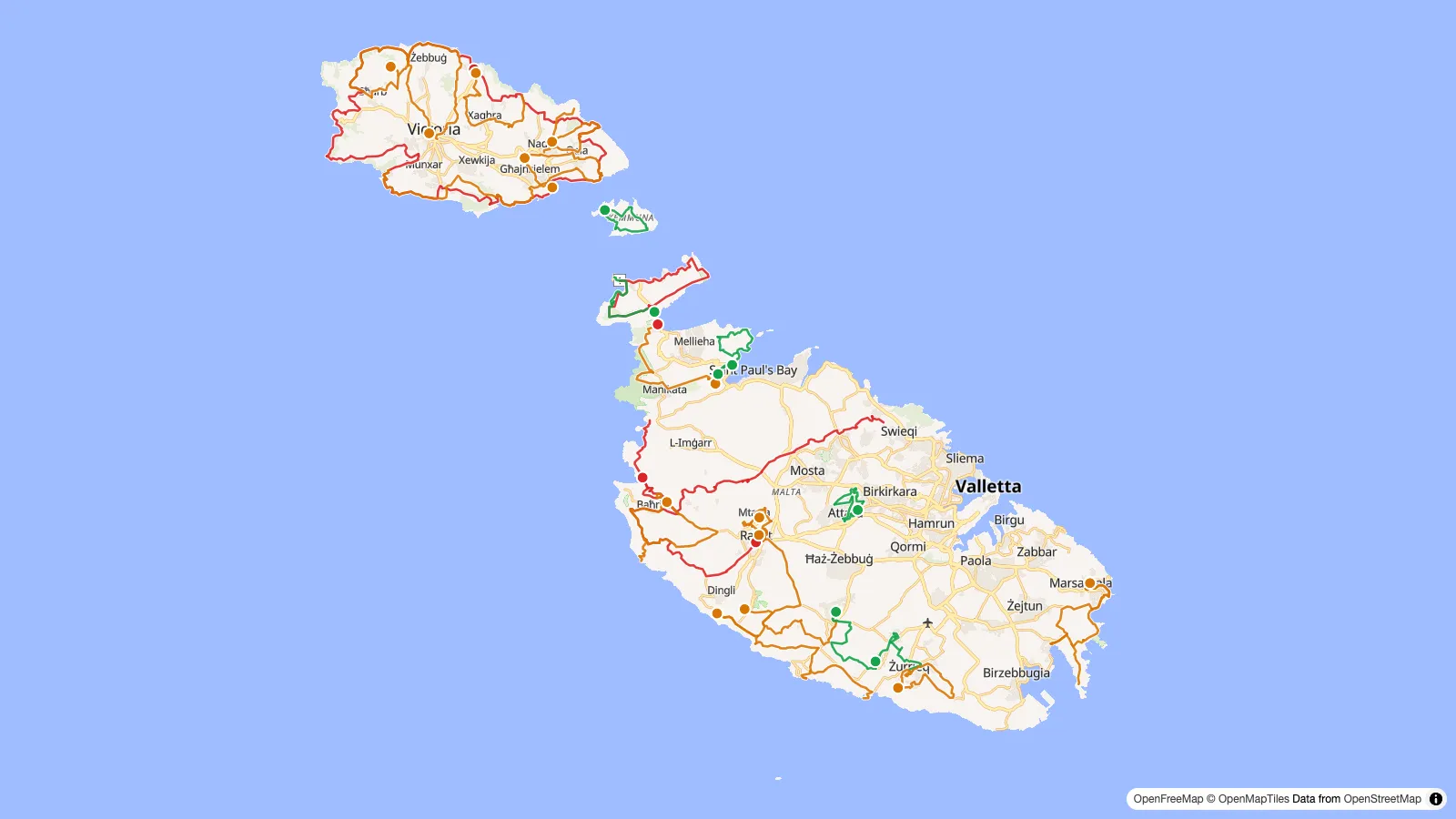
| Gozo | €500-750 | Quietest, cheapest, slowest pace |
Add it up and a single nomad renting a one-bed in Gzira, eating out a couple of times a week and taking the (free) bus, lands around €1,450-2,250 a month all in. Skip the Sliema seafront premium and you save €200-400 a month without changing much about your day.
The workspace line is the one thing nomads add that other renters don't. A hot desk or dedicated desk at a coworking space runs about €150-300 a month, with the scene clustered around Sliema, Gzira and Msida. Honestly, plenty of people skip it. Home internet here is quick enough that a coworking membership is really a fee for getting out of the flat and meeting other remote workers, which is a real reason, just not a connectivity one. You can scout the coworking spots and other on-the-ground services on the Malta expat services map.
Internet and coworking: the connectivity reality
This matters more to us than to anyone else, so I will be concrete. I am on GO Max, GO's top home plan at about €50 a month, and a WiFi speed test from my sofa clocks 543 Mbps down and 69 up with a 6 ms ping. Not plugged in. From the couch. In a year it has never once stuttered on a video call.
You do not need the top plan. Entry fibre runs €25-30 a month for 100 to 250 Mbps, which handles calls and 4K streaming without complaint. The three providers are GO, Melita and Epic, and which one reaches your exact address matters more than the brand. I compare them properly in the telephone and internet guide, including the contract traps.
The one catch for nomads: home fibre is usually a 24-month contract. If you are here for a season rather than years, skip it. GO's Plug 'n' GO box works out of the carton over the mobile network from around €28 a month, or you just live on a generous mobile data SIM. Book any real fibre install the day you sign a lease, because a fresh install needing an engineer can take one to two weeks.
Public WiFi in cafés is fine for email and patchy for calls, so do not plan your work life around it. And fibre reaches Gozo now too, at speeds as good as the main island, so basing yourself there no longer means slow internet.
Where nomads actually base themselves
Four answers cover almost everyone, and I have gone deeper on all of them in the where to live guide.
Sliema and St Julian's are the default landing zone: seafront promenade, every restaurant and gym you could want, the biggest concentration of other remote workers, and the highest rents. Great for your first few months when you want everything walkable and a ready-made social scene.
Gzira, Msida and Ta' Xbiex are where I point most people after they have found their feet. Ten to twenty minutes on foot from Sliema, a few hundred euro a month cheaper, and the Gzira seafront has quietly become one of the best food strips on the island. Same lifestyle, less rent.
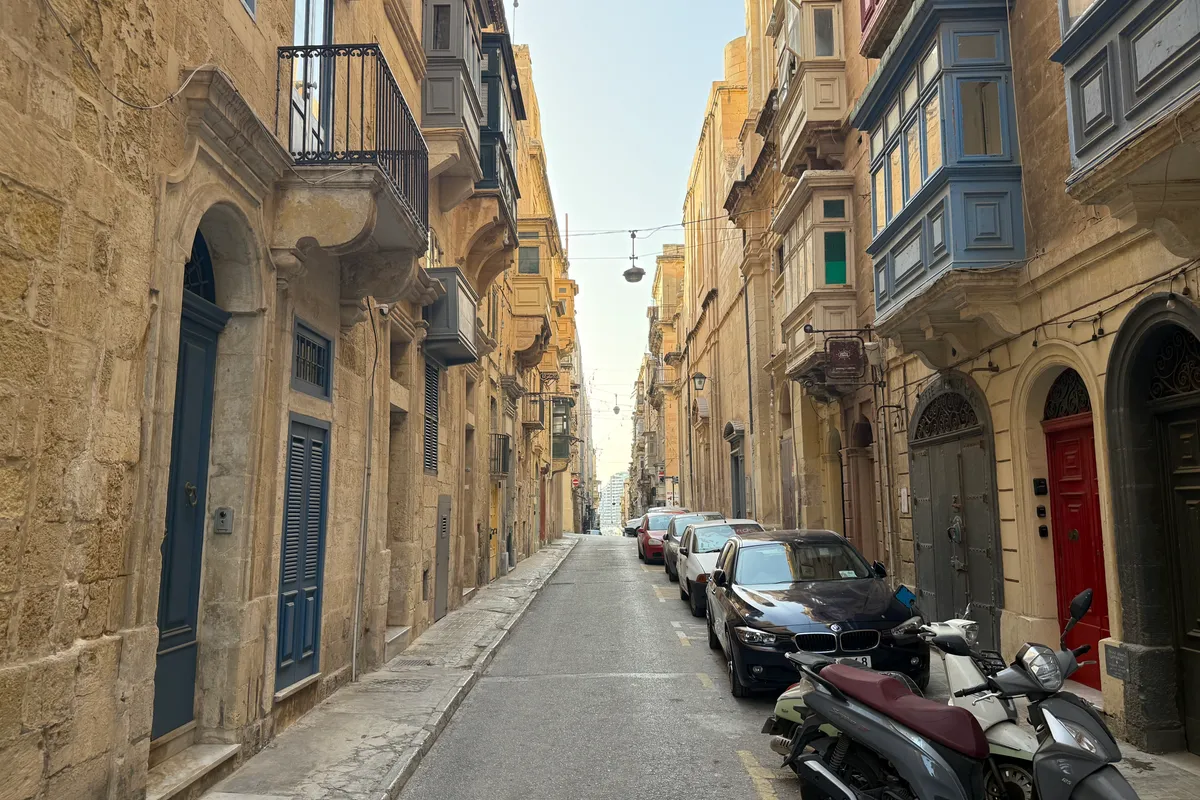
Valletta suits the nomad who wants character over convenience: honey-coloured limestone, a walkable capital, more culture than nightlife. Supply is tight and buildings are old, so fibre and parking need checking before you sign.
Gozo is the slow-living pick. Cheaper rent, a tighter community, a ferry between you and the airport. Some people love the calm, others feel cut off by month three. Try it for a few weeks before committing.
Before you sign anything, read the renting guide, because the deposit-plus-agency-fee upfront hit (typically €1,500-2,500 on a one-bed) surprises people.
Malta vs Madeira, Tenerife and Valencia
The old version of this article ranked nine European "hubs" by some made-up growth percentage. Useless. Here is the comparison that decides where a nomad lands: the visa, the tax and the cost. Tenerife and Valencia both run on Spain's rules, Madeira on Portugal's.
| Malta | Madeira (Portugal) | Tenerife / Valencia (Spain) | |
|---|---|---|---|
| Visa | Nomad Residence Permit | D8 visa | Digital Nomad Visa |
| Min income | ~€3,500/mo | ~€3,680/mo | ~€2,850/mo |
| Headline tax | 0% then flat 10% | Ordinary rates (NHR gone) | 24% flat (Beckham law) |
| Language | English official | Portuguese | Spanish |
| Open to EU? | No (non-EU only) | Non-EU (EU free-move) | Non-EU (EU free-move) |
A few honest reads on that table. Spain has the lowest income bar and a genuinely warm nomad scene, but the Beckham law flat rate is 24% and it mostly suits employees, not freelancers, so your tax bill is far higher than Malta's 10%. Madeira is gorgeous and pioneered the Digital Nomad Village idea, but Portugal scrapped its NHR tax break at the end of 2024, so the old tax magic is gone and you now pay ordinary Portuguese rates on a €3,680 income floor.
Malta's pitch is narrow but strong: the lowest effective tax of the three once you clear year one, and English as an official language, which removes the daily friction of admin, leases and doctor visits in a language you are still learning. What Malta loses on is size. It is a small, dense, sun-baked island, so if you need mountains, big-city anonymity or cheap Iberian rents, one of the others wins. If you want low tax and zero language barrier, Malta is hard to beat.
So is Malta worth it for nomads?
For a non-EU remote worker earning north of €42,000, the Nomad Residence Permit is one of the cleanest low-tax bases in Europe: a tax-free first year, a flat 10% after, four years of runway, all in English, on an island where the internet genuinely works. The catch is that Malta is small and rents in the walkable zones are not cheap, so budget honestly and base yourself in Gzira rather than the Sliema seafront if the maths is tight.
For an EU citizen, you do not touch the permit at all. You move, you register, and you sort your tax under the ordinary or non-dom rules, which for many freelancers lands in the same efficient place by a different route. And if your freelance operation has real scale, running it through a Maltese company at the 5% effective corporate rate is the comparison worth modelling before you settle on a structure; the registration steps and the freelance-versus-company trade-off on the paperwork side are in my guide to starting a business in Malta.
Either way, the thing that keeps people here past the first year is not the tax rate. It is that daily life is easy: you speak the language, the sun shows up, the wifi holds, and the whole island is a short drive end to end. The tax is just what gets you in the door. If you want to check the practical services and coworking spots before you commit, they are all on the expat services map.
Written byVincent Ventalon
French software engineer living in St Julian's and running his company from Malta. This site is what I learned on the way.More about me