Best Beaches in Malta 2026: Top 10 Sandy & Rocky Bays Ranked
21 min read
Malta's best sandy beach is Ramla Bay on Gozo. The best on the main island is Għajn Tuffieħa. Families should pick Mellieħa Bay, snorkelers the Ċirkewwa marine park (Għar Lapsi, the usual pick, is shut for storm repairs through 2026), and the Blue Lagoon now requires a free booked pass before you can set foot on Comino's shore.
Here is my full ranking, then the detail on each:
| Rank | Beach | Type | Best for | Getting there by bus |
|---|---|---|---|---|
| 1 | Ramla Bay (Gozo) | Red sand | The full-day pilgrimage | Ferry + 302 from Victoria |
| 2 | Għajn Tuffieħa | Sand | Best beach on the main island | 44 from Valletta, 225 from Sliema |
| 3 | Għar Lapsi | Rocky cove | Snorkeling, calm water (closed for repairs in 2026) | Car (realistically) |
| 4 | Blue Lagoon (Comino) | White-sand lagoon | The postcard shot (book a pass) | Boat from Ċirkewwa or tours |
| 5 | Mellieħa Bay | Sand | Families with kids | 41/42 from Valletta |
| 6 | St Peter's Pool | Natural rock pool | Cliff jumping, photos | 81 + a long walk |
| 7 | Golden Bay | Sand | Sunsets, full facilities | 44 from Valletta, 225 from Sliema |
| 8 | Paradise Bay | Sandy cove | Combining with a Gozo trip | 41/42 toward Ċirkewwa + walk |
| 9 | San Blas Bay (Gozo) | Red sand | Near-total solitude | Ferry + 302/306 area + steep path |
| 10 | Fond Għadir (Sliema) | Rocky, Blue Flag | Everyday swims, morning dips | Walkable from Sliema |
A word on how I ranked these. I live here, and after several summers my criteria have drifted away from what tourist guides use. Water quality and setting still count, but so does the question nobody asks in a listicle: would I go back on a random Tuesday? Crowds, access, and whether the place still feels good in August all feed into the order. You will disagree with some of it. That's what a ranking is for.
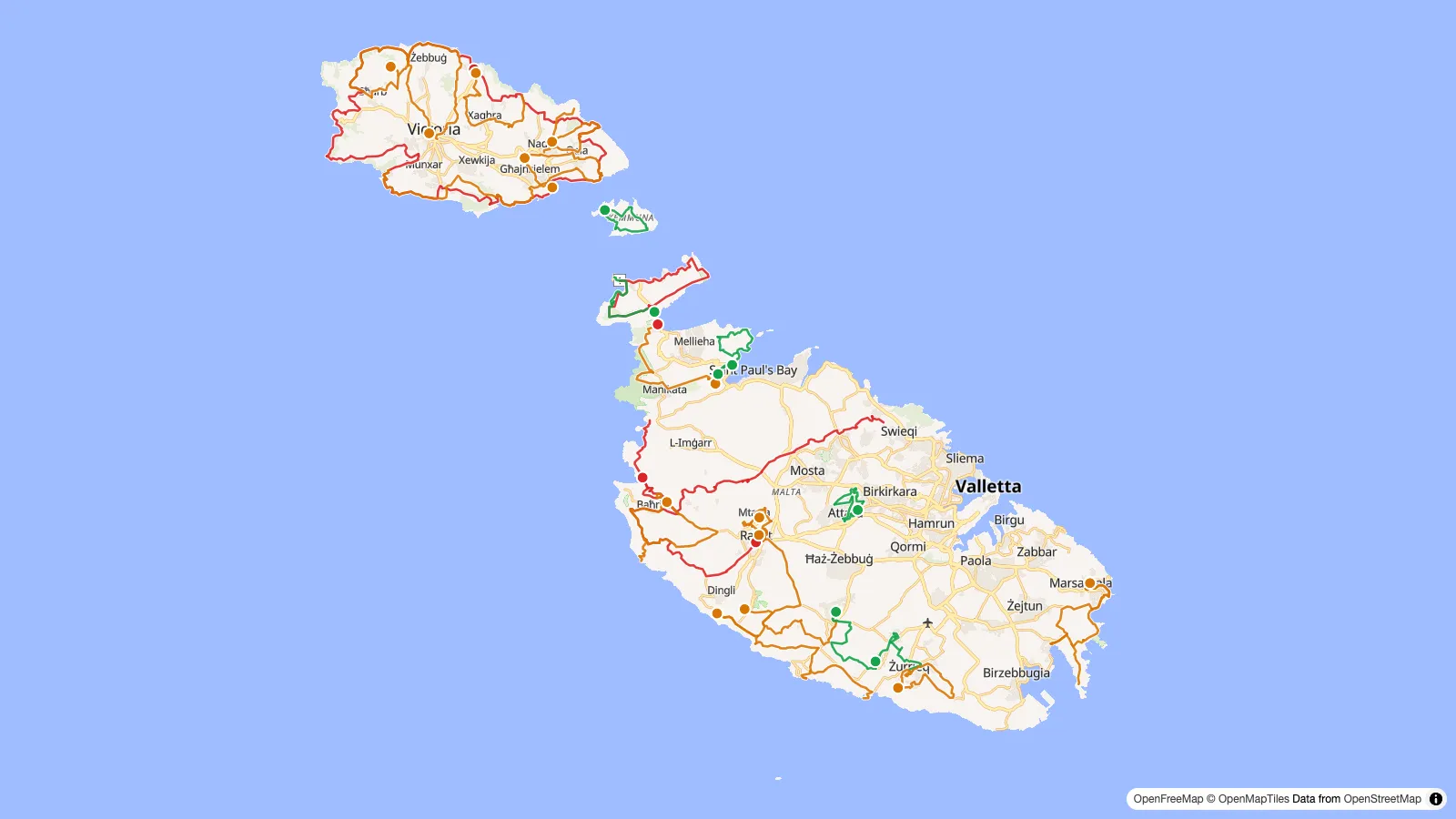
If you want to see how these beaches sit relative to everything else worth doing here, they are all plotted on the interactive Malta map alongside the historical sites, viewpoints and day trips.
One expectation to reset before we start: if you're imagining long stretches of white sand with palm trees, Malta will surprise you. The island has about 130 kilometers of coastline but you can count the proper sandy beaches on two hands. Most of the coast is rocky limestone: cliffs, flat rock platforms, and coves carved into the stone. Once I jumped off the rocks in Sliema for the first time and opened my eyes underwater, I stopped missing the sand. The swimming here is exceptional, with some of the cleanest water in the Mediterranean and visibility that can reach 30 meters on a good day.
The Top 10, Ranked
1. Ramla Bay, Gozo (Ir-Ramla l-Ħamra)
The best beach in the Maltese islands, and I don't think it's close. Ramla is a wide bay of red-orange sand (the name literally means "the red sandy beach"), backed by a green valley and overlooked by the ridge where Calypso's Cave sits, supposedly where the nymph kept Odysseus captive in Homer's Odyssey.
The sand color is unlike anything else in Malta, the water is clear and shallow enough for families, and outside July and August you can have long stretches nearly to yourself. It holds Blue Flag status, there's a kiosk for drinks and snacks, and the walk up to the Calypso viewpoint gives you the photo that ends up on postcards.
Yes, it takes half a day to get there from the main island. That's part of why it stays this good. Make it a full Gozo day: swim in the morning, lunch in Victoria or Marsalforn, and if the island wins you over, I've written about what living on Gozo is like. Short on time? It slots in as day two of my 3-day Malta itinerary.
Getting there: ferry from Ċirkewwa to Mġarr (€4.65 return, about 25 minutes), then bus 302 from Victoria. The stop leaves you a 450-meter walk from the sand. Full ferry detail is in the Malta and Gozo transport guide, and the buses, scooter hire and taxis on the island are in my guide to getting around Gozo.
2. Għajn Tuffieħa (Riviera Beach)
The best beach on the main island, and my personal favorite for a reason that sounds like a downside: to reach it you descend roughly 200 stone steps cut into the cliff. That single fact filters out most of the crowds that pack Golden Bay one headland over.
The sand has a reddish tint, the clay slopes around the bay form a natural amphitheatre, and even in July you can find space. The sunset view from the top of the steps, with Il-Qarraba rock splitting the two bays, is one of the best on the island.
There are minimal facilities at the bottom: a small seasonal kiosk at best, no sunbed rows, little shade. Bring water, food and an umbrella, and accept that the climb back up in the afternoon heat is the entry fee. Skip it if steps are a problem; pick Golden Bay next door instead.
Getting there: bus 44 from Valletta or 225 from the Sliema Ferries (about 50 minutes). Get off at the Riviera stop, per Malta Public Transport.
3. Għar Lapsi
Closed for repairs (2026). Storm Harry battered the south coast on 19-20 January 2026 and hit Għar Lapsi hard: the slipway and access ramp were destroyed and part of the cliff face collapsed. The government has committed a €2 million rebuild covering the ramp, slipway and cliff stabilisation, and works are still under way with no confirmed reopening date. Access is restricted for now, so don't plan a swim here in 2026 without checking the latest before you go. I'm keeping it in the ranking because, in a normal year, it earns the spot. For south-coast snorkeling in the meantime, Wied iż-Żurrieq by the Blue Grotto is the closest substitute.
Not a beach at all in the sandcastle sense, and still third on my list. Għar Lapsi is a small sheltered cove on the south coast near Siġġiewi, a natural pool in the rocks with crystal-clear water and what is normally the best shore snorkeling on the main island. The cove is protected from waves, so it stays calm when the north coast is choppy.
The underwater life is the draw: wrasse everywhere, octopus in the crevices, sea urchins on the rocks (wear water shoes, more on that later), and caves and boulders to explore if you swim out. There used to be a restaurant on the rocks where you could eat fresh fish while your feet dried in the sun, though the storm forced the seafront businesses to close and their return depends on the rebuild. It feels like a secret even though every Maltese family knows it.
Getting there: car, realistically, once it reopens. Buses toward Siġġiewi leave you a long way out. Parking is limited but manageable outside peak weekends. If you don't drive yet, this spot alone is an argument for getting your Maltese driving situation sorted.
4. Blue Lagoon, Comino
The most famous stretch of water in Malta, and the one that changed the most since I first wrote this guide. The lagoon itself deserves the hype: shallow, luminous turquoise water over white sand between Comino and Cominotto, the kind of color you assume is edited until you're standing in it.
The change is that access is now regulated. Since 1 May 2025, anyone going ashore at the Blue Lagoon needs a free Visitor Pass booked at blcomino.com, with no more than 4,000 people allowed on site at any one time across three daily slots (8:00-13:00, 13:30-17:30, 18:00-22:00), according to the Malta Tourism Authority. You get a QR code by email, swap it for a wristband at the entry point, and landing without one risks a fine. In summer you should book well before the day.
Is it still worth it? Yes, on a June or September weekday, on an early boat. The cap has taken the edge off the worst sardine-tin days, but July weekends are still a lot of humanity in a small cove. Santa Marija Bay, a 15-minute walk across Comino, remains the quiet escape when the lagoon fills up. The full logistics (boats, tours, what to bring) are in the Comino day trip guide.
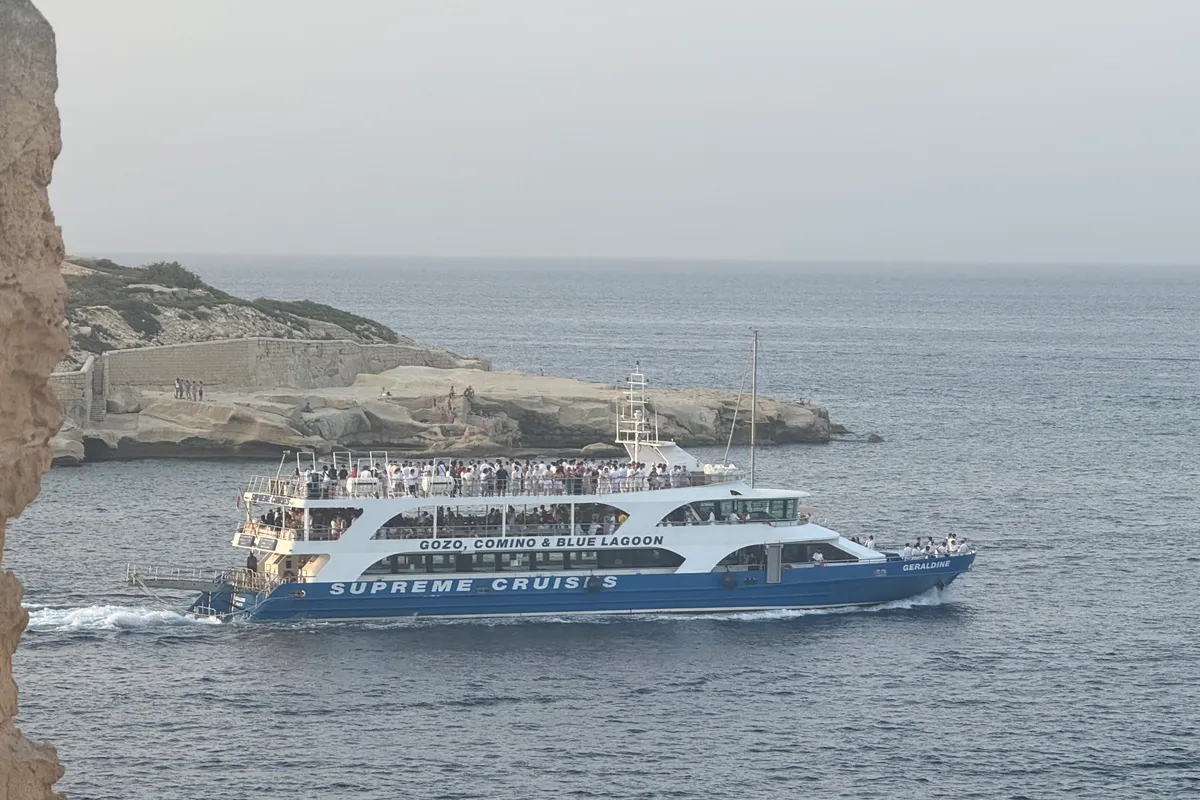
Getting there: boats from Ċirkewwa and Marfa, or organized tours from Sliema and Buġibba. No scheduled public ferry lands you there without a tour or crossing operator.
5. Mellieħa Bay (Għadira)
The largest sandy beach in Malta at roughly 800 meters, and the undisputed family beach. The water stays shallow a long way out, the waves are gentle, and there's a full strip of kiosks, restaurants and watersports rentals behind the sand, all licence-free (the boat licence rule only bites above 30 HP). If you have small children, this is where you'll end up most weekends, and there are worse fates.
The trade-offs are exactly what you'd guess for the island's most popular beach: summer weekends are chaos, the coast road behind it jams, and by August seaweed can pile up along parts of the shore. Come on a weekday, or before 10 AM, and it's a different place. The village of Mellieħa on the hill above is also one of the best bases for families choosing where to live in Malta, partly because this beach is its back garden.
Getting there: buses 41 or 42 from Valletta stop right behind the beach; 221 comes from Buġibba and 222 from the Sliema coast. By car it's about 30 minutes from Sliema, longer in summer traffic.
6. St Peter's Pool
The Instagram one. St Peter's Pool is a natural swimming pool carved into the limestone near Marsaxlokk: a rectangular lagoon with smooth rock walls, deep turquoise water, and ledges for jumping at heights from a manageable 3-4 meters to a genuinely scary 8+.
It's spectacular, and it comes with zero infrastructure. No toilets, no shade, no kiosk, no lifeguard. The rocks scorch in summer, the path from the parking area is rough, and people have been injured jumping without checking depth or their own ability. Treat the jumps as optional and the water shoes as mandatory.
Getting there: drive toward Delimara and follow the signs, or take bus 81 from Valletta to the Abdosir stop near Marsaxlokk and walk the rest, which is a solid 25-30 minutes on an exposed road. Marsaxlokk's Sunday fish market plus a swim here makes a good combined day out.
7. Golden Bay (Il-Bajja tal-Mixquqa)
Malta's most photographed beach, and the one I'd send a first-time visitor to if they wanted sand, facilities and zero logistics. Wide crescent of golden sand, west-facing so the sunsets are spectacular, lifeguards in season, kiosks on the beach and the Radisson resort on the cliff above with a terrace made for sunset drinks.
Why only seventh? Because in July and August it gets towel-to-towel packed, the water churns murky on busy days, and Għajn Tuffieħa is sitting right there, one headland away, being better. Golden Bay is the convenient choice, not the memorable one. Outside peak season the gap narrows a lot, and a May or October afternoon here is lovely.
Getting there: same buses as Għajn Tuffieħa (44 from Valletta, 225 from Sliema, 223 from St Paul's Bay), but stay on until the terminus instead of getting off at Riviera. Parking fills by mid-morning on summer weekends.
8. Paradise Bay
A small sandy cove at the very northern tip of Malta, below the Ċirkewwa ferry terminal. It's pretty, sheltered, and has surprisingly good snorkeling along its rocky edges: schools of fish, the occasional octopus, and clear water despite the ferry traffic nearby.
Its size is the catch. In peak summer it fills to capacity by mid-morning. Come on a shoulder-season weekday, or use it the way locals do: as the swim before or after a Gozo crossing, since you're at the ferry terminal anyway.
Getting there: buses 41, 42, 221 or 222 toward Ċirkewwa, then a short walk down. The 101 detours to a dedicated Paradise stop, but it runs only a handful of times a day, so don't build a plan around it.
9. San Blas Bay, Gozo
Ramla Bay's little sibling: the same red-orange sand and clear water, a fraction of the size, and a steep rough path that takes 15 sweaty minutes down and considerably more back up. That path is the whole story. On many days you'll share San Blas with a dozen people.
There are no facilities, the descent is genuinely unsuitable for anyone with mobility issues, and flip-flops are a bad idea on the way down. If that paragraph sounded like a warning, it was also an invitation. This is the most unspoilt sandy beach in the Maltese islands.
Getting there: from Victoria, buses toward Nadur get you to the top of the access road; the walk down starts where the tarmac gives up.
10. Fond Għadir and the Sliema Front
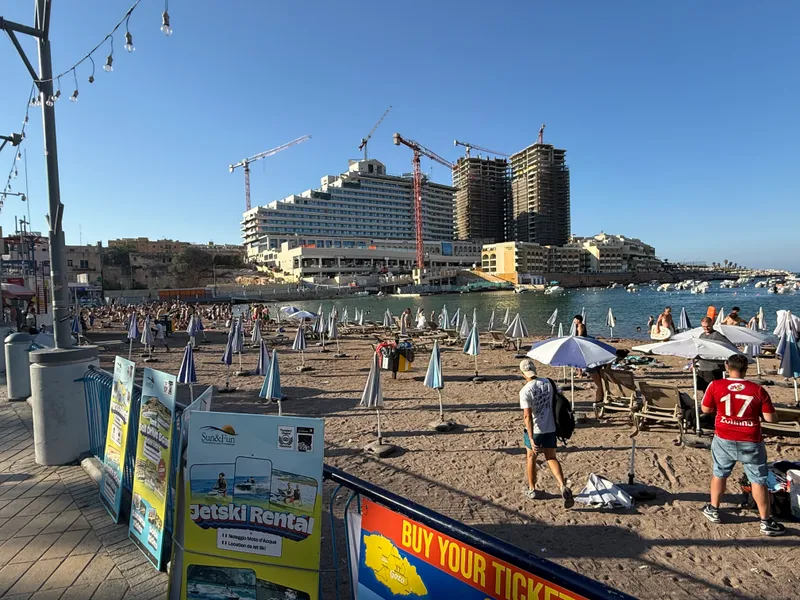
The everyday beach. If you live in Sliema, Gżira or St Julian's, as a large share of expats do, your daily swim is the rocky waterfront from Tigne Point to St George's Bay: flat limestone slabs, ladders into deep clear water, and a string of lidos in between. Fond Għadir is the standout stretch and holds Blue Flag status, a rare thing for a rocky urban swimming spot.
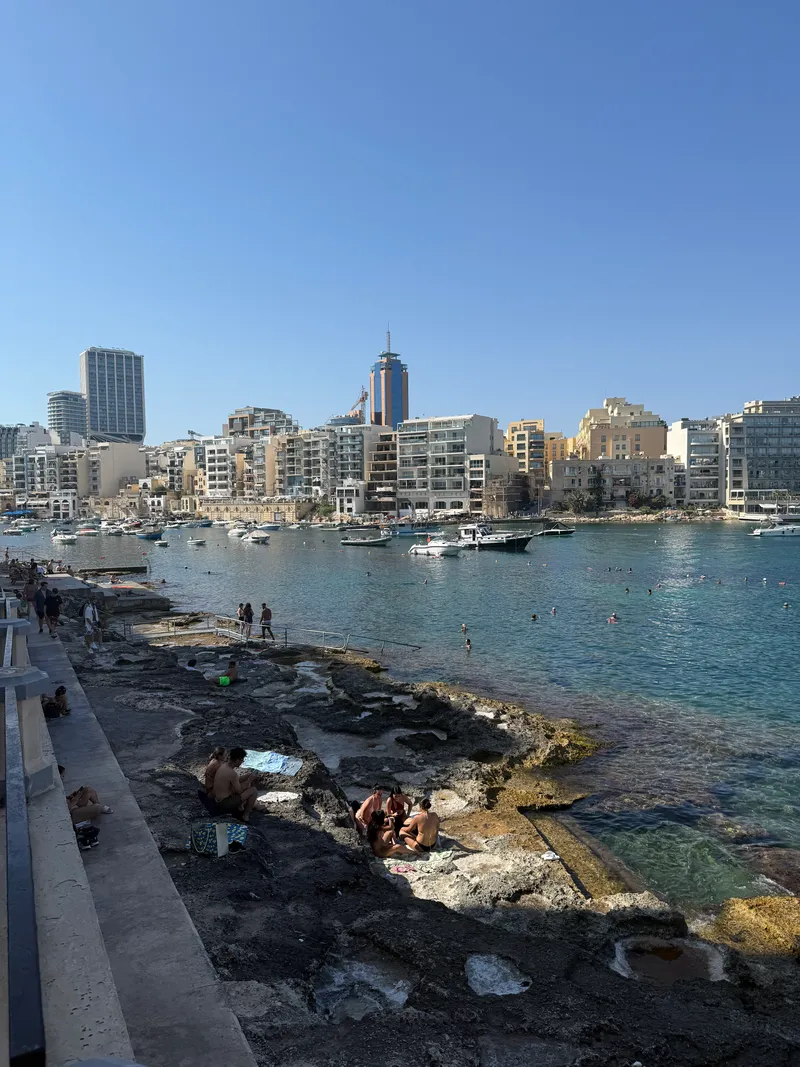
A morning swim here before work is one of the best free upgrades Malta offers, and plenty of residents keep it going year-round. My own spot is Exiles, a little further along the front: a rocky point with ladders, a kiosk, and nothing else. After all the ranking above, I should admit that a swim there, five minutes from home, is where I'm happiest on this island. You need a swimmable patch of coast within walking distance far more than you need any beach on this list. St George's Bay in St Julian's is a small sandy pocket surrounded by hotels, best known for recovery swims after a night in Paceville. As the cost of living guide points out, this whole coastline costs nothing, which for a daily habit beats any beach club.
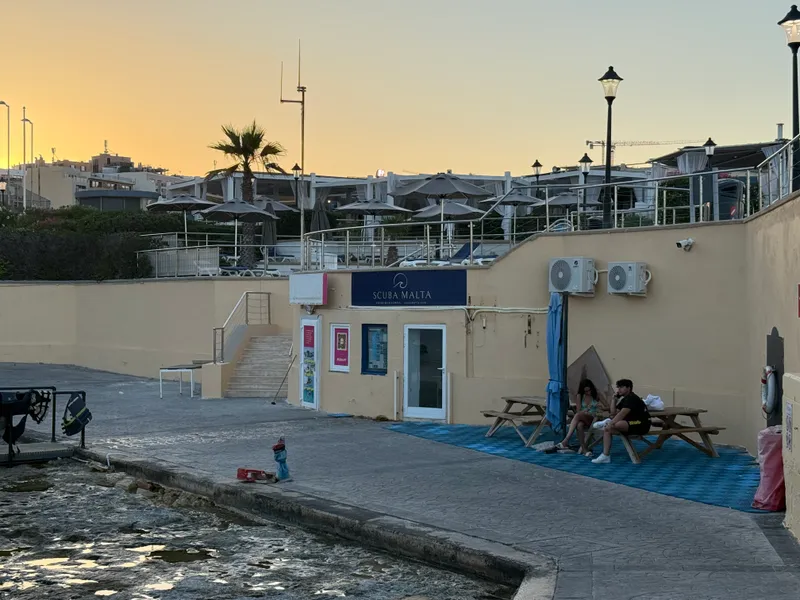
Getting there: on foot, that's the point. Buses along the Sliema front stop every few hundred meters.
Sandy vs Rocky: How Malta's Coastline Works
The ranking above mixes sand, rocks and one lagoon, so here's the logic locals operate on. Sandy beaches are for the occasion: a family Sunday, visitors in town, a full beach day with the cool box. Rocky spots are for the habit: the after-work swim, the Saturday morning dip. The rocks are less crowded, the water off them is deeper and clearer because there's no sand to stir up, and there's one within walking distance of most addresses on the coast. This top 10 is the shortlist; if you want to see all of them, every monitored swimming spot on the islands is plotted on the Malta beaches map, filterable by type, access and facilities.
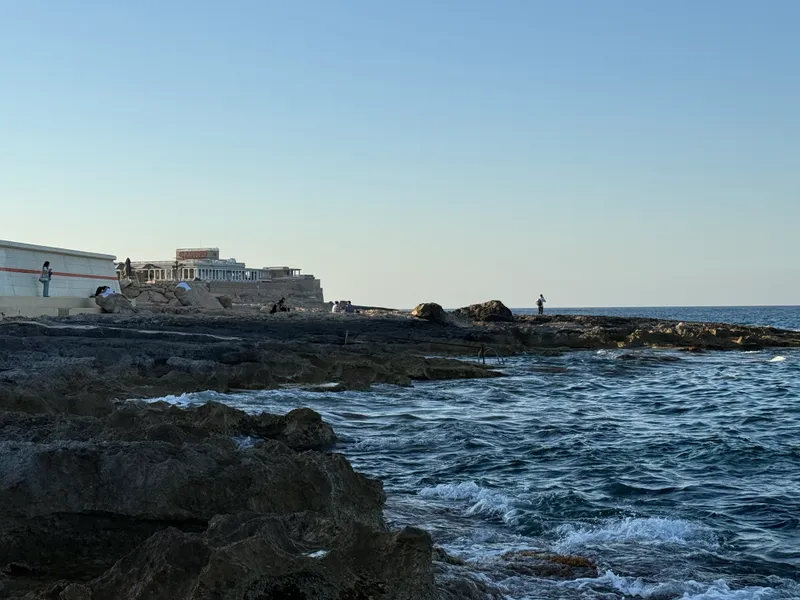
Between the free rocks sit the lidos: privately run sections of coastline where you pay for a sunbed, umbrella and bar service. Expect somewhere around €10-15 for a basic sunbed day in season and considerably more at the fashionable ones; prices move every year, so check before you commit to a €40 day bed you didn't need. Laying your towel on the free rocks between them is entirely normal and nobody will look at you twice.
A general marker of quality: around a dozen beaches across Malta and Gozo hold Blue Flag status, which in practice means monitored water quality, lifeguards in season and decent facilities. The current list is on Blue Flag Malta and includes Golden Bay, Għajn Tuffieħa, Mellieħa Bay, Fond Għadir and, on Gozo, Ramla, Marsalforn and Ħondoq ir-Rummien.
Malta Beaches Month by Month
| Month | Water temp | Crowds | Verdict |
|---|---|---|---|
| May | 18-20°C | Very low | Empty beaches, brisk swims, coastal walks |
| June | 22-24°C | Moderate | The best month. Warm water, space on the sand |
| July | 26-28°C | Very high | Peak season. Go early morning or late afternoon |
| August | 27-28°C | Extreme | Bath-warm water, packed sand, jellyfish risk |
| September | 24-26°C | Moderate | The sweet spot. Warm sea, crowds gone after week one |
| October | 22-24°C | Low | Last comfortable month, cool evenings |
| Nov-April | 14-18°C | Minimal | Hardy swimmers only; the coast is for walking |
May opens the season. The water is a polite 18-20°C, which is a number that reads better than it feels, but the beaches are empty and the island is green. June is my favorite beach month and I will defend it: the sea hits 22-24°C, school isn't out everywhere yet, and you can still park at Golden Bay at 11 AM.
July and August are peak everything. The water reaches 26-28°C, essentially bath temperature, the sandy beaches pack out on weekends, and parking becomes a competitive sport. If you're here in August, do what residents do: swim at 7 AM or after 5 PM, and spend the middle of the day anywhere with air conditioning. August is also when the mauve stingers tend to arrive, which brings us to the practical section below.
September is the month expats discover in their second year and never shut up about afterwards (I'm doing it right now). The sea holds at 24-26°C, the crowds thin dramatically after the first week, and the light turns golden. October still offers 22-24°C water and quiet sand, though the evenings cool off fast. From November to April the sea drops to 14-18°C. You'll see hardy locals and Northern Europeans swimming right through winter; for everyone else the coastline becomes a walking route, and a spectacular one. Off-season is also when the rest of the island's culture gets your full attention.
Wind Matters More Than Temperature
Here's the piece of local knowledge that took me a full year to absorb: on any given summer day, the question isn't whether it's beach weather (it is), it's which coast the wind is hitting. The prevailing northwesterly, the majjistral, blows straight into Golden Bay, Għajn Tuffieħa and Mellieħa Bay. On a strong majjistral day those beaches get proper waves and an undertow, the lifeguarded ones fly red flags, and swimming ranges from unpleasant to dangerous. The same afternoon, Għar Lapsi and the south coast will be flat calm.
So before picking a beach, check the wind direction, not the temperature. North or northwest wind: go south (St Peter's Pool, Wied iż-Żurrieq, Ħondoq on Gozo; Għar Lapsi normally too, but it's closed for repairs in 2026). South or southeast wind (the sirocco, which also brings the hot sticky days): the northern sandy bays are sheltered and lovely. The Sliema rocky front sits somewhere in between and handles most conditions. Locals do this calculation without thinking; tourists drive 40 minutes to Golden Bay, look at the brown churned-up water, and drive back. One glance at a weather app spares you the round trip.
Respect the flags where lifeguards operate: red means stay out, and the undertow at Għajn Tuffieħa and Golden Bay on rough days is stronger than it looks from the sand. People underestimate it every summer.
How to Get to the Beaches by Bus
You don't need a car for Malta's beaches, though it widens your options (Għar Lapsi and the Delimara coves are effectively car-only). The bus network reaches every major sandy bay, and the fares are simple: free for residents with a personalised Tallinja card, and €2.50 per two-hour trip for everyone else in summer (€2.00 in winter), per Malta Public Transport. The transport guide covers the card and the Gozo ferries in detail.
The routes that matter for beaches:
| Route | From | Serves |
|---|---|---|
| 44 | Valletta | Golden Bay + Għajn Tuffieħa (Riviera stop) |
| 225 | Sliema Ferries | Golden Bay + Għajn Tuffieħa, ~50 min |
| 223 | Buġibba / St Paul's Bay | Golden Bay + Għajn Tuffieħa |
| 41 / 42 | Valletta | Mellieħa Bay, then on toward Ċirkewwa (Paradise Bay) |
| 221 / 222 | Buġibba / Sliema coast | Mellieħa Bay, Ċirkewwa |
| 81 | Valletta | Marsaxlokk (Abdosir stop) for St Peter's Pool + walk |
| 302 | Victoria (Gozo) | Ramla Bay, 450 m walk from the stop |
Two habits will save you pain. First, check the return times before you settle onto the sand; beach routes thin out in the evening and a missed last connection from Għajn Tuffieħa is a long, expensive Bolt home. Second, in July and August the buses back from the northern beaches arrive already full by late afternoon, so either leave before the 6 PM wave or embrace a sunset swim and travel late. Bolt and eCabs work well as a fallback: a Sliema to Golden Bay ride typically lands around €10-15.
Best Beaches for Families
Ranked for the specific misery-avoidance needs of parents: shallow water, facilities, lifeguards, and somewhere to buy an emergency ice cream.
- Mellieħa Bay: shallow for a hundred meters out, lifeguards in season, kiosks, watersports. The default, and rightly so.
- Golden Bay: sandy, lifeguarded, good facilities, manageable slope into the water. Busier, but it absorbs crowds better than most.
- Ramla Bay, Gozo: calm shallow water and soft sand; the ferry ride doubles as entertainment.
- Buġibba Perched Beach: a small artificial sandy platform on the Buġibba front with easy access and calm water, handy if you're based in the St Paul's Bay area.
- Paradise Bay: sheltered and shallow, just small; go early with kids or skip it in August.
Best Snorkeling Spots
Malta's underwater world is underrated next to its beaches, and the shore access is the best part: no boat needed for any of these.
- Blue Hole, Dwejra (Gozo): a 15-meter shaft in the limestone opening to the sea through an underwater arch, next to where the Azure Window stood until it collapsed in a March 2017 storm. Divers get the arch; snorkelers get a vertigo-inducing look down the shaft and the reef around it.
- Għar Lapsi: calm, protected, fish everywhere from the moment you put your face in, normally the best beginner spot on the islands. Closed for storm repairs through 2026 (see the ranking above), so check before you go.
- Wied iż-Żurrieq: the Blue Grotto's underwater landscape from the surface. Rocky entry, deep water, occasional cuttlefish.
- Ċirkewwa / Paradise Bay: reef, fish traffic, and a sunken tugboat visible from the surface on calm days.
- St Peter's Pool: the rock walls act like a natural aquarium, and the depth right off the ledge gives you that swimming-over-the-abyss feeling.
Basic mask-and-snorkel sets go for €15-30 at beach shops; if you'll snorkel more than twice, spend a bit more at a dive shop in Sliema for a mask that seals properly. A leaking mask has ruined more snorkeling sessions than any jellyfish.
Jellyfish, Urchins and Other Fine Print
Jellyfish. The one to know is the mauve stinger (Pelagia noctiluca), a small purple jellyfish that shows up mostly in August and September when currents push swarms inshore. The sting burns hard for a few hours but is rarely dangerous. Rinse with seawater or vinegar, never fresh water (it fires the remaining stinging cells). Beaches post warnings when swarms arrive, and local swimmers' Facebook groups track sightings in real time.
Sea urchins. Black urchins carpet the shallow rocks all around the islands. Step on one barefoot and you'll spend the evening with tweezers. Water shoes cost a few euros and solve the problem entirely; wear them anywhere you're entering from rocks. This is the single most useful sentence in this guide.
Sun. UV levels run very high to extreme from June through September. SPF 50, a hat, water, and respect for the 12-2 PM window. Malta's sun punishes the pale and the overconfident equally.
Dogs. Dogs are not allowed on Malta's sandy beaches, and none of the ten above is a dog spot. There are 16 officially designated dog-friendly beaches instead, mostly rocky stretches like Tigné Point, Rinella Bay and Żonqor Point, plus Imġiebaħ Bay in Selmun. The dog-friendly beaches list on our beaches map has all of them, sortable, with a filter to show only those on the map. Leash on until the dog is in the water.
Litter. Take everything back out with you, especially at the wild spots like San Blas and Kalanka that have no bins. The unspoilt places stay that way because most visitors bother.
The Ones That Didn't Make the Cut
A few beaches you'll see in other guides, and why they're not in my ten. Pretty Bay in Birżebbuġa has decent free sand and clean water, and it also has the Malta Freeport's container cranes as a backdrop; it's a perfectly good local beach if you live in the south, not a destination. St George's Bay in St Julian's is small, hotel-ringed and fine for a quick dip, but you don't cross the island for it. Xlendi on Gozo is a lovely inlet village where the diving outranks the tiny pebble beach. Ħondoq ir-Rummien, also Gozo, is a quiet Blue Flag cove facing Comino that would make a top-15. Kalanka and the wild Delimara coves reward the determined with solitude, rough paths included. And Santa Marija Bay on Comino is less a ranking entry than a tactic: it's where you walk when the Blue Lagoon is full.
So Which Beach Should You Pick?
If you're a visitor with three days: one day for the Blue Lagoon (booked pass, earliest slot, weekday), one for Għajn Tuffieħa with sunset from the top of the steps, and one for Gozo with Ramla Bay at its center. That trio covers the postcard, the best of the main island and the best of the archipelago.
If you've just moved here: don't chase the list. Start with whatever's closest to your flat, even if it's a concrete platform with a ladder, and make it a habit before the novelty wears off. Then work outward, one new spot per month. By the end of your first summer you'll have a personal top five that disagrees with mine, which is exactly how it should work. The beach that matters most in Malta is the one close enough that you swim on a random Tuesday.
Written byVincent Ventalon
French software engineer living in St Julian's and running his company from Malta. This site is what I learned on the way.More about me