Malta to Gozo Ferry, Buses & Taxis 2026: Getting Around
Updated
15 min read
In this article
Getting between Malta and Gozo means a 25-minute ferry from Ċirkewwa (€4.65 return, running 24/7) or a 45-minute fast ferry from Valletta. On Gozo itself, buses radiate hourly from Victoria, Bolt and eCabs work with patience, and the Tallinja card is valid everywhere.
That's the short version. The longer version, which is what this guide is for, includes a ticketing quirk that confuses every first-time visitor, a bus network that's free for residents but not for tourists, and a car queue at Mġarr that can cost you two ferries on a summer Sunday. I live here and cross to Gozo regularly, so this is the practical picture as of July 2026, with prices I've checked against the official sources rather than recycled from old blog posts.
Malta and Gozo Transport at a Glance (2026 Prices)
| Option | Price (2026) | Time | Worth knowing |
|---|---|---|---|
| Gozo Channel ferry (Ċirkewwa–Mġarr) | €4.65 return, foot | ~25 min | Runs 24/7, pay only on return from Gozo |
| Gozo Channel with car | €15.70 return (car + driver) | ~25 min | Queues on summer weekends |
| Fast ferry (Valletta–Mġarr) | from ~€7.50 one way | ~45 min | Foot passengers only |
| Malta/Gozo buses (visitor) | €2.50 single (summer) | varies | Valid 2 hours with transfers |
| Malta/Gozo buses (resident) | Free with personalised Tallinja card | varies | €25 one-off card fee |
| Bolt / eCabs (Malta) | ~€8-15 typical hop | fast | Reliable, cashless |
| Bolt / eCabs (Gozo) | similar fares, long waits | slow to arrive | Drivers rare, don't plan around them |
| Car or scooter rental | expect ~€25-40/day in summer | n/a | The best way to get around Gozo |
Everything below unpacks this table, starting with the question that brings most people to this page.
How Do You Get From Malta to Gozo?
There are exactly two scheduled ways across the channel: the Gozo Channel ferry from Ċirkewwa at Malta's northern tip, and the Gozo Highspeed fast ferry from Valletta's Grand Harbour. No bridge, no airport link. The tunnel you may have read about has been "in planning" for as long as anyone can remember, and as of 2026 it remains a political talking point rather than a construction site. Plan around the ferries.
The Gozo Channel ferry from Ċirkewwa
This is the workhorse: the big white ships you see shuttling back and forth between Ċirkewwa and Mġarr harbour in Gozo. According to Gozo Channel, the crossing takes about 25 minutes, and the service runs 24 hours a day, every day of the year. During the day you'll rarely wait more than 30 minutes for a departure; overnight the gaps stretch to roughly 45 minutes or more, with the thinnest service between about 1 AM and 5 AM.
Fares, as of 2026:
| Ticket | Price (return) |
|---|---|
| Adult foot passenger | €4.65 |
| Child (3-12) | €1.15 |
| Under 3 | Free |
| Car + driver | €15.70 |
| Motorcycle + rider | €8.15 |
Two things about this system trip up almost everyone. First, you don't pay on the way to Gozo. There's no ticket check at Ċirkewwa for foot passengers; you buy your return ticket at Mġarr when you leave Gozo. It feels wrong the first time, like you've somehow sneaked aboard. You haven't. The logic is that everyone who goes must come back, so they only staff one set of ticket booths. Second, if you're taking a car, vehicle tickets are sold online or at the Mġarr booths only, and you can't reserve a spot on a specific sailing. You queue, you board the next boat with space, and on an August Sunday evening heading back to Malta that queue can mean watching one or two ferries leave without you. Reduced night fares apply on late departures between November and March (a car drops to €12.80 return), which matters if you're a regular.
The boats themselves are pleasant. There's a proper deck, a cafeteria with decent coffee, and on a clear day the view of Comino sliding past makes the crossing feel shorter than it is. In winter, strong northwesterly winds occasionally delay or cancel sailings, so if you have a flight to catch on the Malta side, build in slack or cross the night before. Anyone considering the crossing as a daily routine should read my guide to living in Gozo, where I'm honest about how the commute wears on you.
How do you get to Ċirkewwa without a car?
Ċirkewwa is at the far northern end of Malta, and getting there is often the longest part of the whole trip. By bus, the main options are routes 41 and 42 from Valletta (about an hour, often more in traffic), route 222 from the Sliema and St Julian's coast, route 221 from Buġibba, and the X1 express from the airport, which is the sensible choice if you're heading straight to Gozo after landing. All are standard-fare routes on the Malta Public Transport network.
A Bolt or eCabs ride from the airport or Valletta to Ċirkewwa typically lands somewhere in the €30-45 range depending on demand. Split between three or four people, it's worth it purely for the hour of your life you get back.
How often does the Valletta fast ferry to Gozo run?
The fast ferry is the newer option, and for anyone based around Valletta, Floriana or the Three Cities it changed the Gozo equation completely. Gozo Highspeed operates high-speed catamarans between Lascaris Wharf in the Grand Harbour and Mġarr, foot passengers only, in about 45 minutes. There are typically 15 or more sailings a day, starting before 6 AM and running into the late evening, with extra crossings in summer and later last boats on weekends. One-way fares start around €7.50, and return deals often work out cheaper per leg; check the current timetable at Gozo Highspeed because it shifts between seasons.
A bit of history explains the name confusion you'll find in older articles: two competing operators (Virtu Ferries' Gozo Fast Ferry and Gozo High Speed) launched simultaneously in June 2021, spent two years splitting an unprofitable market, then merged into the single Gozo Highspeed brand in July 2023. If a blog tells you to book on "gozofastferry.com", it's out of date. There's also been movement on new coastal routes: in early 2026 the fast ferry operators were the only bidders on a government concession for a Sliema-Buġibba connection, reported by The Shift, so the map may grow. Nothing to plan around yet.
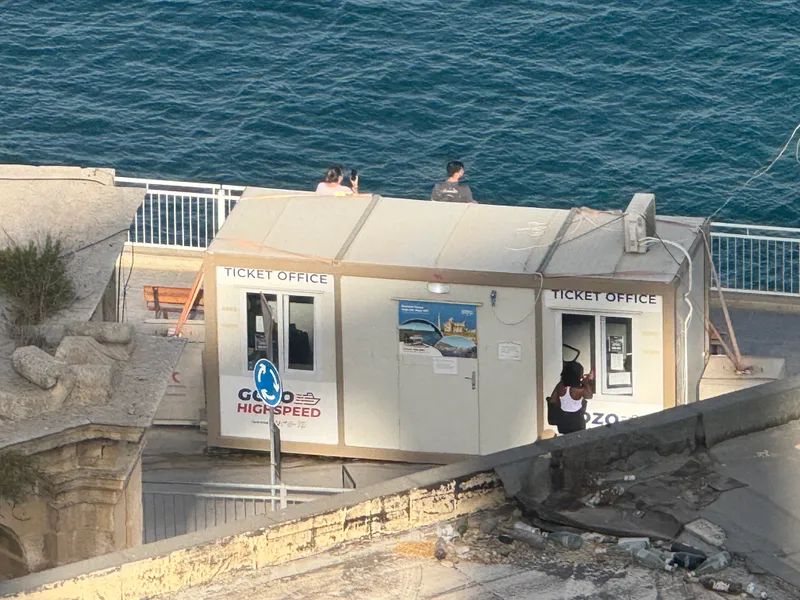
One honest caveat: the catamarans feel the weather more than the big Gozo Channel ships. On rough winter days the fast ferry cancels first, and the crossing out of the Grand Harbour can be lively enough that anyone prone to seasickness should sit low and central, or take the Ċirkewwa route instead.
Which ferry should you take?
It comes down to where you're starting and whether you have a car. From Valletta, the Three Cities or anywhere on the harbour, the fast ferry wins: 45 minutes door to harbour beats an hour-plus bus to Ċirkewwa followed by the crossing. From St Paul's Bay, Mellieħa or anywhere in the north, Ċirkewwa is closer and the €4.65 fare is unbeatable. With a car, there's no choice: Gozo Channel is the only ferry that takes vehicles. And if you're on a tight budget, note that the Ċirkewwa ferry plus a free-or-cheap bus each side is the cheapest possible Gozo day trip, which is exactly how the language students I've written about tend to do it. The Gozo crossing is day two of my 3-day Malta itinerary, if you want to see how it fits a short trip.
How Long Does It Take to Get From Malta Airport to Gozo?
This deserves its own answer because the airport-to-Gozo run is the single most-planned journey on these islands, and the timetabled numbers lie by omission. Here are realistic door-to-door times from Malta International Airport to Victoria, Gozo:
| Route | Realistic time | Cost per person |
|---|---|---|
| X1 bus → Ċirkewwa ferry → 301 bus | 3 to 3.5 hours | ~€7-10 |
| Taxi/Bolt → Ċirkewwa ferry → 301 bus | ~2 hours | ~€15-25 (shared taxi) |
| Taxi → Ċirkewwa ferry → taxi on Gozo | ~1.75 hours | ~€25-40 (shared) |
| Bus/taxi to Valletta → fast ferry → 301 bus | 2 to 2.5 hours | ~€12-20 |
The X1 is the budget classic and the one I'd only recommend if your flight lands at a civilised hour and you're not hauling much luggage: it's a long, stop-heavy ride up the whole spine of Malta, and after a 6 AM flight it feels longer. The taxi-to-Ċirkewwa option is the best value-for-sanity ratio for two or more people. The Valletta fast ferry route looks slower on paper but wins if your flight lands in the evening, because the transfer to Valletta is short and you spend the bulk of the journey on a boat rather than in traffic.
Whichever you pick, don't book anything on Gozo that depends on you arriving within a specific hour. Between flight delays, the Ċirkewwa bus crawl and ferry timing, treat the airport-to-Victoria run as "sometime in a three-hour window" and you'll arrive relaxed instead of furious.
Getting Around Gozo Once You Arrive
Both ferries land at Mġarr, and from there Gozo works differently from Malta. The public buses all run through the Victoria terminal, mostly hourly, with route 301 meeting the ferries every 15-30 minutes. Bolt operates but pickups are slow, and white taxis wait at the harbour. For a day or a weekend, hiring a scooter, car or quad at Mġarr is the easiest option, and the hire desks are a few steps from the ferry exit.
I've put all of it in a separate guide to getting around Gozo: hire prices and licence rules, the bus routes you'll use, the hop-on hop-off tourist buses, taxi fares and how to combine them.
Does the Tallinja Card Work in Gozo?
Yes, completely. This question shows up constantly in search data and the answer is simpler than people expect: Malta and Gozo share one public transport system, one operator, one fare structure and one card. A Tallinja card issued in Malta works on every Gozo bus, and vice versa. Tap on boarding, same as anywhere on Malta.
What the card does not cover is the water. The Gozo Channel ferry and the fast ferry are separate companies with separate tickets; no bus card, pass or app ticket gets you across the channel.
The bigger nuance is who travels free. Since October 2022, holders of a personalised Tallinja card (the one with your name and photo, €25 one-off fee for adults, €5 for children) travel free on all day and night routes across both islands, per Malta Public Transport. Free personalised travel is a resident benefit in practice: the registration wants a Maltese address, and the card takes a couple of weeks to arrive. It's one of the first pieces of admin worth doing when you move here, right up there with the items on my moving to Malta checklist.
Visitors and anyone without the personalised card pay standard fares, which in 2026 look like this:
| Ticket | Price |
|---|---|
| Single (cash/contactless, summer) | €2.50 |
| Single (winter, mid-Oct to mid-June) | €2.00 |
| Night routes | €3.00 |
| 12-journey card (shareable) | €19.00 |
| Explore card, 7 days unlimited (adult) | €25.00 |
| Explore card, 7 days (child 4-10) | €7.00 |
A single ticket is valid for two hours including transfers, which on Gozo means Mġarr-Victoria-Xlendi counts as one fare if you make the connection. If you're around for a week and plan to use buses most days, the Explore card pays for itself by day three or four in summer. Pay contactless on board with a bank card if you'd rather not deal with any of it; it costs the same as cash.
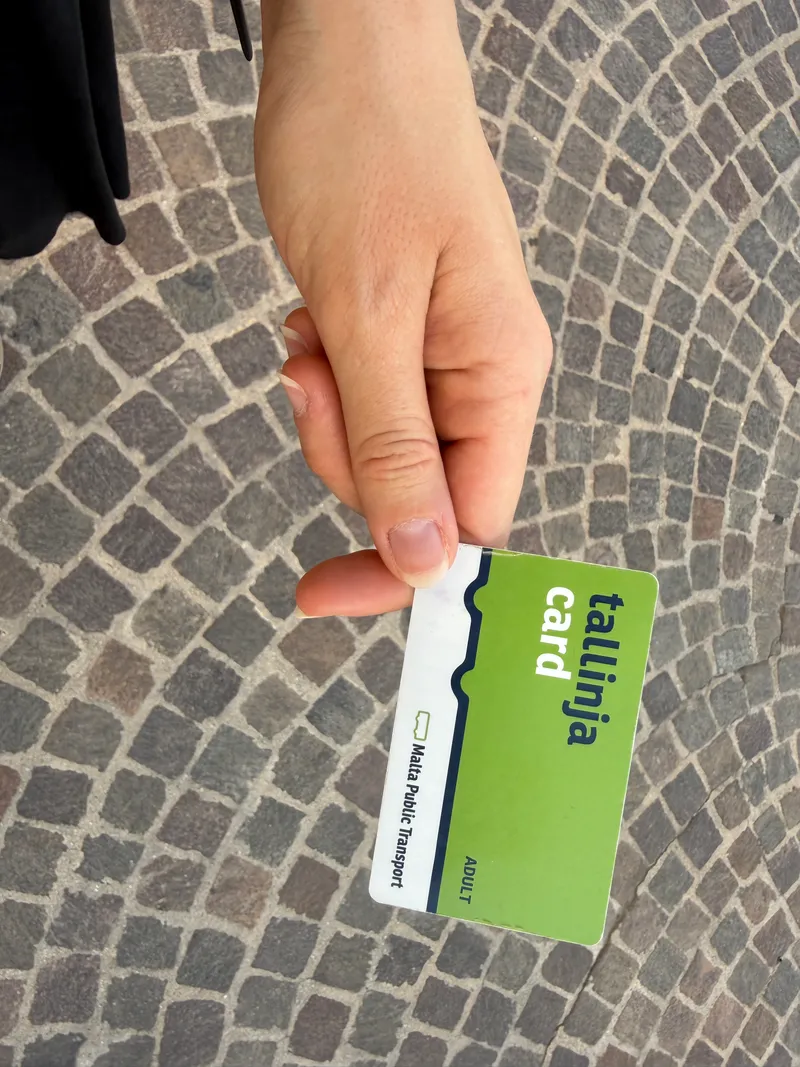
Get the Tallinja app either way. The real-time bus positions are the difference between "the 311 is four minutes away" and standing at a dusty stop in San Lawrenz wondering whether the timetable is fiction.
Getting Around Malta Itself
Most Gozo trips start with getting across Malta, so here's the mainland picture in brief.
The bus network is a hub-and-spoke design centred on Valletta, which is efficient if you're going to or from the capital and mildly maddening if you're not: plenty of cross-island trips route through Valletta even when it's geometrically absurd. Key corridors run every 10-15 minutes in daytime (Valletta-Sliema-St Julian's, Valletta-Mosta, the airport X routes); rural and coastal routes drop to every 30-60 minutes. The same fares from the table above apply, the same free-for-residents rule, the same app. Buses run roughly 5:30 AM to 11 PM with a skeleton night network (N-prefixed routes, €3.00) on weekends around the nightlife areas.
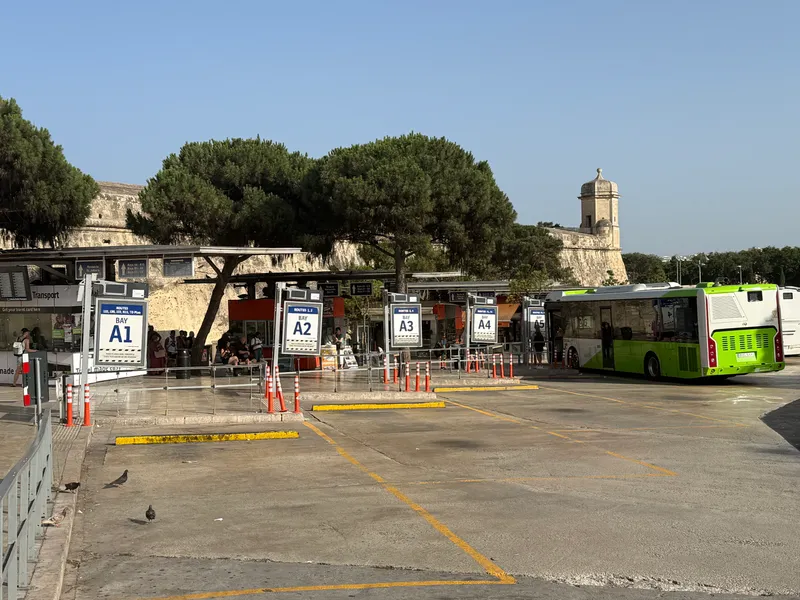
The honest weaknesses: traffic and crowding. Buses sit in the same jams as everyone else, so the 40-minute timetabled run from Valletta to Ċirkewwa is an hour in practice more often than not, and in July and August the coastal routes get packed enough that full buses sail past stops. Residents adapt by traveling off-peak; visitors should just budget generous margins around anything time-critical, ferries included.
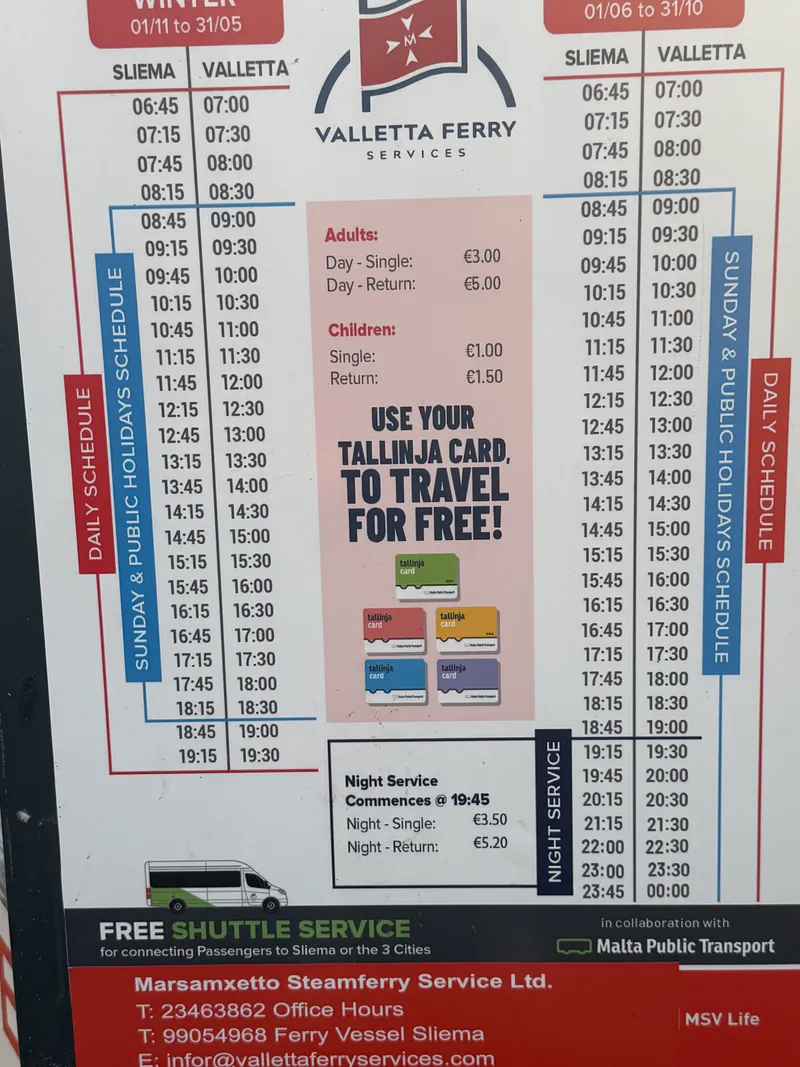
Beyond the buses, Malta has a genuinely good harbour shortcut: the Valletta ferries to Sliema and to the Three Cities, about 10-15 minutes across the water for €1.50-2.80 depending on ticket, running frequently through the day. They beat the equivalent bus ride in both time and scenery, and they're included in the resident free-travel scheme. Ride-hailing is the other pillar: Bolt, eCabs and Uber all work well on Malta, typical short hops run €8-15, and airport pickups are orderly. Traditional white taxis at the airport charge fixed zone rates posted at the terminal; expect around €20-30 to the central coast towns.
One thing you won't find anymore: rental e-scooters. Malta became the first European country to ban them outright in March 2024 after years of pavement chaos, so the Bolt scooters that older guides mention are gone. Private e-scooters remain legal; the rental fleets do not exist.
When Do Ferries Get Cancelled? Seasonal Realities
The system described above is the fair-weather version, which in Malta means most of the year. The exceptions are worth knowing in advance.
Winter wind is the main disruptor. From roughly November to March, strong northwesterly blows (the majjistral) occasionally delay or suspend crossings. The big Gozo Channel ships are remarkably resilient and full cancellations are rare, usually measured in hours rather than days, but the fast ferry gives up earlier: its catamarans cancel in conditions the Ċirkewwa route shrugs off. The operators post disruptions on their sites and social channels the same morning. The practical rules: in winter, check before you travel rather than after you've crossed Malta; if you absolutely must be on the other island (a flight, mostly), cross the evening before; and if the fast ferry cancels, the Ċirkewwa route is usually still running, so the fallback is a bus or Bolt to the north rather than a lost day.
Summer crowds are the other seasonal tax. July and August weekends compress a year of demand into a few hours: Maltese families head to Gozo on Friday evening and return Sunday evening, and the vehicle queues at Mġarr on a Sunday night are the stuff of local legend. Foot passengers never queue meaningfully; cars do. If you're driving to Gozo in peak season, cross early Saturday and come back Monday, or accept the wait. The buses feel it too, with the 302 to Ramla Bay at capacity by mid-morning in August.
Festa season (June to September) adds a charming layer of chaos on Gozo specifically: village feast weekends close roads and divert bus routes with signage that assumes you already know where everything is. The Tallinja app usually reflects diversions; the printed timetables don't. If a bus doesn't show where you expect it in a village decked in banners and lights, walk towards the church square and ask anyone. And if you'd rather catch a festa than dodge one, the month-by-month calendar of Malta's festas and nightlife shows when they're thickest.
Do You Actually Need a Car in Malta or Gozo?
My honest take, after years here: on Malta, no, if you live in the Valletta-Sliema-St Julian's-Gzira corridor where most expats land. Between free buses, the harbour ferries, ride-hailing and walking, a car is a €250-450 monthly line item (more on that in my cost of living breakdown) that spends most of its time hunting for parking. Where the calculus flips is family life in the quieter towns, jobs with awkward hours, or a genuine beach-and-countryside habit; the full pros and cons are in the driving in Malta guide, including the used-car market and licence rules.
On Gozo, mostly yes. Visiting for a day or two, the buses plus the odd Bolt will carry you. Living there, or staying a couple of weeks, the hourly frequencies and thin taxi supply make a car close to essential, and every Gozo resident I know drives. It's the least car-optional part of the country precisely because it's the most rural.
What About Comino?
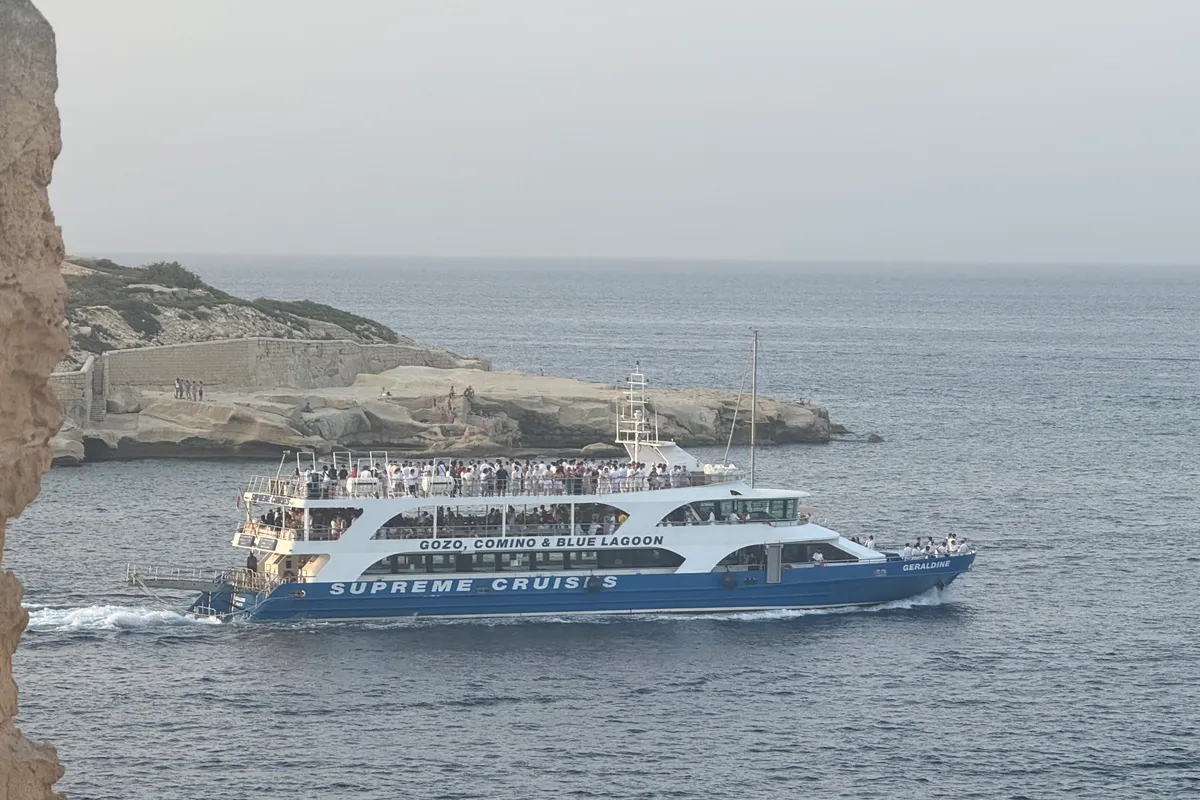
The third island has no scheduled ferry, no buses and no cars; it's reached by small boats that shuttle from Ċirkewwa/Marfa on Malta and from Mġarr on Gozo, heavily in summer and sparsely in winter. Since 2025 the Blue Lagoon operates with visitor caps and a booking system, which changed the game enough that I wrote a separate Comino and Blue Lagoon day trip guide covering the boats, the booking and the timing that avoids the worst crowds. If you're already doing the Gozo Channel crossing, note that Comino boats from Mġarr make it easy to bolt a half-day lagoon stop onto a Gozo trip.
So What's the Best Way to Get Around Malta and Gozo?
If I had to compress this whole guide into a strategy: base yourself somewhere with good bus corridors or harbour ferry access (my where to live guide flags which towns those are), use buses and boats as your default, apps for nights and awkward hops, and rent a car only for the specific days you need one.
For the classic Gozo day trip from the Valletta area, take the fast ferry over and the 301 up to Victoria; it's the least logistics for the most Gozo. From the north of Malta, the Ċirkewwa ferry plus buses is nearly free and perfectly pleasant outside peak summer. For a Gozo weekend or longer, rent a small car on the Gozo side and skip the vehicle queue. And whatever you do, download the Tallinja app before you need it, keep the ferry timetable open in a tab, and treat any bus connection tighter than 20 minutes as a coin flip.
The channel crossing never really gets old, either. Even on the hundredth trip, stepping onto the Mġarr quay with the Citadel on the ridge ahead still feels like arriving somewhere that runs a beat slower than the island you just left. The logistics are the price of admission, and as prices go, €4.65 is hard to argue with.
Written byVincent Ventalon
French software engineer living in St Julian's and running his company from Malta. This site is what I learned on the way.More about me