Open a Bank Account in Malta 2026: Best Banks, Non-Residents
23 min read

In this article
Opening a bank account in Malta as an expat takes anywhere from a single afternoon to several months, depending entirely on which door you walk through. A digital account like Moneybase, Revolut or Wise is running within 24 hours. A traditional bank such as Bank of Valletta, APS, Lombard or BNF wants a residence card, a Maltese tax number and a reference letter from your old bank, and even then you are looking at two to six weeks. Here is exactly how each option works in 2026, which one I would pick for your situation, and what my own account opening (seven months, three appointments) taught me about the order to do things in.
| Option | Type | Maltese IBAN? | Time to open | Rough cost | Best for |
|---|---|---|---|---|---|
| Revolut | EU e-money / bank (Lithuania) | No (LT IBAN) | Minutes | Free–€45/mo | Daily spending, arriving before you have a residence card |
| Wise | E-money institution | No (BE IBAN) | Minutes–days | Pay per use | Receiving foreign income, currency conversion |
| Moneybase | Maltese financial institution | Yes (MT IBAN) | ~24 hours | Low, transparent tiers | A real Maltese IBAN without the branch queue |
| MeDirect | Maltese bank | Yes (MT IBAN) | Online, days | Low | Easiest "proper bank", savings |
| APS Bank | Maltese retail bank | Yes (MT IBAN) | 2–6 weeks | ~€1–2/mo | Full local banking, branches |
| BOV | Maltese retail bank | Yes (MT IBAN) | 3–8+ weeks | €60/yr if address abroad | Widest branch/ATM network, mortgages |
| HSBC Malta | Maltese bank (being sold to CrediaBank) | Yes (MT IBAN) | Slow | Standard | Existing customers only, see below |
| N26 | German bank | No | n/a | n/a | Nothing: it does not accept Malta addresses |
That table is the whole article in miniature. The rest of this guide explains the trade-offs, the documents, the one trick that saves you a month, what changes if you hold a non-EU passport, and how I would set things up today.
This page is about personal banking. If you are opening an account for a Maltese company or as a freelancer invoicing clients, read the companion guide on business bank accounts and EMIs in Malta instead, because the rules, the paperwork and the winners are all different there.
Do You Actually Need a Maltese Bank Account?
Start here, because a lot of new arrivals waste weeks chasing a Bank of Valletta account they did not need yet.
Malta is in the Eurozone, so your existing European card already works in every shop, restaurant and petrol station. If you are coming from outside the euro area, a Revolut or Wise card gives you a euro balance and clean exchange rates from day one. For the first few months of daily life, that is genuinely enough. I know people who have lived here two years on Revolut alone.
So who needs a real local account?
- Anyone applying for a mortgage. Maltese lenders want to see a local account with salary going into it, usually for a good stretch of time before they will talk to you. If buying property is on your horizon, open the account early and think of it as laying track. My guide to buying property in Malta goes into what lenders look for, including the mandatory life assurance nobody warns you about.
- Non-dom residents managing the remittance basis. Malta taxes many foreign residents only on income they bring into the country. A dedicated Maltese account makes it far cleaner to show what was remitted and what stayed offshore. I explain the mechanics in the personal tax guide, and it is the single strongest tax reason to bother with a local account.
- Non-EU employees. Since October 2025 your employer is legally required to pay your wages into an account in your name, so an account is no longer optional once you have a job here. The non-EU section below covers what that means in practice.
- People who keep hitting a local-IBAN wall. Some landlords, a few utilities, and certain government payment portals still ask for a Maltese IBAN. Legally they should accept any SEPA IBAN, and refusing one purely because it starts with LT or BE is IBAN discrimination that is banned under EU rules. But arguing the law with a landlord who has three other tenants waiting is a bad use of your first month here.
If none of that applies to you yet, be honest with yourself and stay digital for now. You can always open the local account later, and it is less painful once you already have a residence card and a lease in hand.
Which Bank in Malta Is Best for Expats?
There are around two dozen licensed banks in Malta, but for a normal expat opening a normal current account the real shortlist is short. Here is how I rank them by ease of getting in the door.
MeDirect: the easiest "real bank"
MeDirect is consistently the least painful traditional bank to open as a newcomer. Much of the process happens online, it is used to dealing with people who are not Maltese-born, and it leans toward savings and investing rather than a branch-on-every-corner retail model. If your priority is having a legitimate Maltese account with a Maltese IBAN and you do not care about walking into a branch, start your applications here.
The trade-off is fewer physical branches and a lighter everyday-banking feel than BOV. For a lot of expats that is a feature, not a bug.
APS Bank: the sensible middle
APS has quietly become one of the more expat-friendly retail banks. It runs a genuinely usable online-only account (the APS product line sits around €1–2 a month depending on the account) and its branch staff have a better reputation for onboarding foreigners than the giants do. If you want a proper high-street bank with cards, branches and a mortgage arm, but without the full BOV ordeal, APS is where I would point most people.
Bank of Valletta (BOV): the giant you will probably end up needing anyway
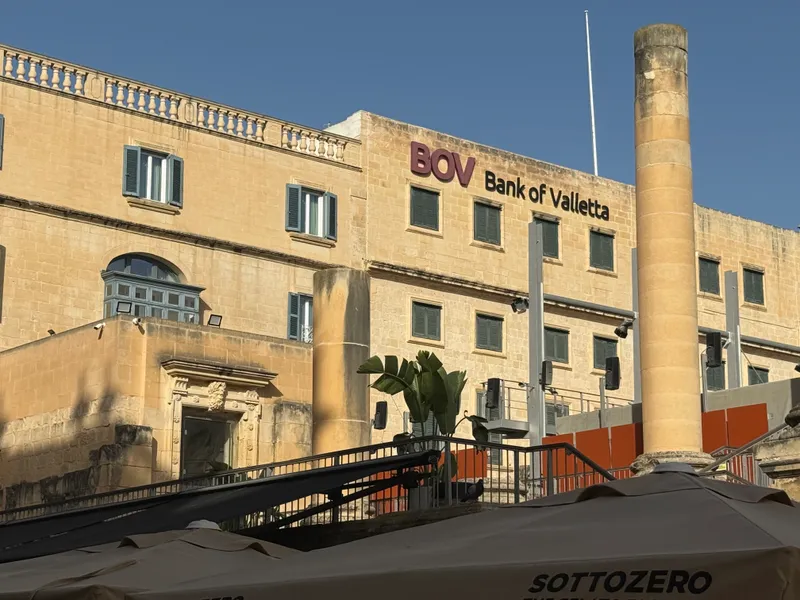
BOV is the biggest bank in Malta, with the widest branch and ATM network and the deepest mortgage business. That reach is exactly why people put up with it. It is also the slowest and most bureaucratic of the lot. Expect several visits, a thick documentation list, and a wait that runs from a few weeks to a couple of months for a personal account, longer if anything about your file is unusual. BOV charges €60 a year if your registered address is outside Malta, which is worth knowing if you are opening before you have a local lease.
My honest take: open a BOV account only when you have a concrete reason (a mortgage, an employer who pays into BOV, a landlord who insists). For getting your feet under the table quickly, it is the wrong first move.
Lombard and BNF: perfectly fine, rarely the first pick
Lombard Bank and BNF Bank are both solid, established Maltese retail banks. There is nothing wrong with either, and BNF in particular has a reasonable reputation for account opening. They just do not usually offer a compelling reason to choose them over APS or MeDirect for a first account, unless a branch happens to be next to your flat or someone local recommends a specific banker there.
HSBC Malta: do not build your plans around it
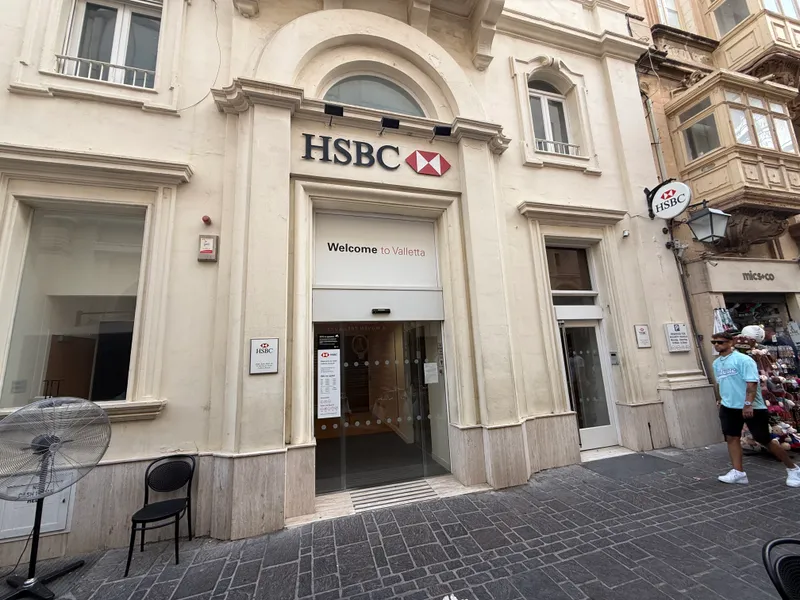
Here is the big 2026 news. HSBC's parent has agreed to sell its 70% controlling stake in HSBC Malta to the Greek bank CrediaBank for €200 million, as reported by Newsbook and covered across the local press. The deal was announced in September 2025, is working through approvals from the MFSA, the European Central Bank and the Bank of Greece, and is expected to complete around the end of 2026 or early 2027, after which the familiar red-and-white HSBC branding on Maltese high streets will eventually change.
For a newcomer this means one thing: do not choose HSBC Malta as your entry bank right now. It was already one of the hardest to open as a foreigner, and it is a business in transition. Existing customers are being reassured that accounts continue to work and staff are being kept on, but if you are starting fresh in 2026, look at APS, MeDirect or the digital options instead and let the CrediaBank dust settle.
What Opening My Own Account Actually Took
Before the document checklists, my own numbers, because "two to six weeks" is the clean-file scenario and mine was anything but. Opening my personal account took the better part of seven to eight months and three separate appointments, each one surfacing a new document or requirement that had not come up at the previous one. The file never failed outright; it just never quite closed.
Part of that was my situation. I had registered my residence as economically self-sufficient rather than as an employee, and for a Maltese bank that is the awkward category: no local employer, no salary landing every month, nothing that fits the checklist a branch officer works from. Somewhere along the way the same bank also rejected my application for a business account outright, one of the pushes that sent me to EMIs for the company side instead.
What made those months livable is that none of it ever blocked daily life, because Revolut had been working since week one. That experience is why this guide is ordered the way it is: get the digital layer running first, let the traditional account grind away in the background, and never let a Maltese branch sit on your critical path. If your file is simpler than mine (a salaried job, one nationality, a registered lease), you should land near the fast end of the range. Just do not plan your move around the assumption.
How to Open a Bank Account in Malta: Documents and Timeline
The traditional route is slow mainly because of the paperwork chain behind it, not the bank itself. Here is what you need and how long it takes.
The documents you will need
For a personal account at a traditional Maltese bank, assemble this before your appointment:
- Passport or national ID card (original, and bring copies).
- Residence certificate or permit from Identità. The residence process is covered in my guide to getting your Maltese residence card.
- Maltese tax number (TIN), which you register for locally.
- Proof of address: a registered rental agreement (banks like to see at least a six-month lease) or a utility bill in your name.
- Proof of income: an employment contract, recent payslips, or evidence of pension or other income. If you are job-hunting, my finding a job in Malta guide is the other half of this puzzle.
- The bank reference letter from your home bank, covered next, because it deserves its own section.
The residence card and the TIN are the two that trip people up, because you cannot get them instantly on arrival. My moving to Malta checklist sequences all of this so you are not stuck waiting on a document you should have started weeks earlier.
The one trick that saves you a month: the bank reference letter
If you take nothing else from this guide, take this. Before you leave your home country, or as soon as you possibly can after arriving, ask your existing bank for a bank reference letter: a short, formal letter confirming you are a customer in good standing, how long you have banked with them, and that your account is not in trouble. It usually costs somewhere between €20 and €100 and takes a few days to issue.
Why it matters so much: BOV and the other traditional banks want proof of your banking history. If you hand them a reference letter, you have supplied it. If you do not, the Maltese bank has to contact your old bank directly and request it, and foreign banks are slow, or ignore the request entirely, or want you to authorise it in person. That single missing piece of paper is the most common reason a Maltese account opening drags from three weeks into three months. Get the letter before you fly, and get two copies while you are at it.
How long it really takes
For a traditional bank, a realistic timeline once you have all your documents is two to six weeks from first appointment to a working debit card. That assumes a clean, simple file: one nationality, a normal salaried job, a proper lease, and the reference letter in hand. Add complexity such as self-employment, income from several countries, a non-EU passport or a tangled tax history, and the enhanced due-diligence checks can stretch it into months. You have read what happened to mine.
Digital options run on a completely different clock. Moneybase advertises account opening in around 24 hours. Revolut and Wise are done in minutes to a day. That gap in speed is the entire argument for the hybrid setup I describe below.
Opening a Bank Account in Malta as a Non-Resident
The question I hear most from people still planning their move: can you open the account from abroad, before you arrive? With a traditional Maltese bank, realistically no. BOV and its peers want a connection to Malta they can document (a lease, an employment contract, a property purchase), they want you in a branch in person, and a file with a foreign address gets the slowest, most sceptical treatment, plus BOV's €60-a-year overseas-address fee.
What you can do from abroad is the digital layer. Revolut and Wise onboard you from your phone in most countries, so you can land in Malta with a working euro card and a SEPA IBAN already in your pocket. The fully online routes to a Maltese IBAN, Moneybase and MeDirect, still assume you are (or are becoming) a Malta resident when they verify you.
If you are a true non-resident with a durable reason for a Maltese account, say you own property here but live elsewhere, some banks will consider it with extra documentation on where your money comes from and why Malta. Expect enhanced due diligence and a file measured in months, and expect to be asked, reasonably, why a SEPA IBAN from anywhere else would not do.
Opening a Bank Account in Malta as a Non-EU National
Everything above applies to you too, but a Single Permit changes the texture of the process in ways the banks' websites never spell out.
Your residence document reads differently to a compliance team. An EU national holds an eResidence document valid for five years, tied to nothing but their own registration. A Single Permit is tied to a specific employer and usually valid for a year at a time, so the bank's file leans heavily on your employment: bring the permit, your employment contract and payslips if you have any, on top of the standard document list.
Your employer is now part of the process by law. Since 1 October 2025, employers in Malta must pay the wages of non-EU workers by bank transfer into an account held in the employee's name; cash wages are banned for employment starting on or after that date, under an amendment to the Employment and Industrial Relations Act flagged by Mifsud & Mifsud Advocates. That cuts both ways: you need an account before your first payday, and your employer has every incentive to help you open one. An employer letter confirming your role and salary does a lot of the work a long banking history would otherwise do, and the larger employers of foreign workers are used to walking new hires through it. Ask HR before you queue up alone.
You have a legal fallback nobody mentions. Under Malta's Payment Accounts Regulations (the local transposition of the EU Payment Accounts Directive), anyone legally resident in the EU is entitled to a basic payment account, and under the EU rules the bank must accept or refuse a complete application within ten business days. A basic account is deliberately plain (payments in and out, a card, no overdraft), but it receives a salary just fine. If a bank strings you along, asking in writing for a "payment account with basic features" changes the conversation.
Budget for the source-of-wealth file. Maltese banks operate under the AML supervision of the FIAU, which expects them to document how your money was generated, not just that you have it. For a salaried worker that means the contract and payslips. If you arrive with savings, expect to show several months of statements from your home bank plus the paperwork behind any large balance: a property sale deed, an inheritance document, whatever tells the story. Non-EU files get this scrutiny at a higher intensity than EU ones, which is why the reference letter and clean statements matter even more for you.
If you are coming to study rather than to work, most of this machinery is more than you need. Banks rarely open full accounts for students without local income, and the digital options cover student life; if a school or landlord insists on a local IBAN, Moneybase is the fast fix. Your real paperwork battle is the visa itself, which the Malta student visa guide breaks down by nationality, and the money side of a study stay is in the student cost guide.
The Digital Options: Revolut, Wise, Moneybase and the N26 Dead End
This is where most expats in Malta actually keep their money day to day, so it deserves real attention.
Revolut: what everyone here uses
Revolut is close to a default second card in Malta. When a small shop, a market stall or a Bolt driver does not take a regular card, Revolut almost always works, and its person-to-person transfers are how locals split a bill or settle a shared taxi. Setup takes minutes from your phone.
Two things worth knowing. First, Revolut gives you a Lithuanian IBAN (it starts with LT), not a Maltese one. Second, Revolut is not just an app: Revolut Bank UAB holds a full European banking licence in Lithuania, so eligible deposits are protected up to €100,000 under the Lithuanian deposit guarantee scheme. That makes it a genuine bank rather than a wallet, which is more reassurance than a lot of people realise they are getting.
The free tier is fine for most people. The paid tiers (up to around €45 a month for the top plan) buy higher exchange limits, insurance and perks that only frequent travellers or big spenders will use.
Wise: the one for foreign income
If money comes to you from abroad, whether that is freelance clients, a foreign employer or rental income back home, Wise is the tool. Its currency conversion is about as cheap and transparent as it gets, and a Wise euro account comes with a real euro IBAN (a Belgian BE number) that receives SEPA transfers exactly like any bank account. Wise is an e-money institution rather than a bank, so it is built for moving and holding money rather than lending it, but for receiving and converting international income it is the gold standard. Plenty of people run Wise and Revolut side by side and let each do what it is best at.
Moneybase: the Maltese IBAN without the queue
If the thing stopping you is specifically the Maltese IBAN, whether for a landlord, a direct debit or a government portal, Moneybase is the clever answer. It is a Malta-licensed financial institution, part of the Calamatta Cuschieri Moneybase group, and it gives you a genuine Maltese (MT) IBAN, a Mastercard, free SEPA payments and even an investing platform, with account opening in around 24 hours from your phone. It bridges the gap between "instant digital account" and "real local bank" better than anything else on the market right now, and I increasingly recommend it as the first account for expats who know they will need a local IBAN but cannot face BOV's queue.
N26: skip it
Just so you do not waste time: N26 does not accept Malta addresses. If you already hold an N26 account from another EU country you can generally keep using it after you move, but you cannot sign up as a new Malta resident. Cross it off your list.
Fees: What You Will Actually Pay
Nobody publishes a clean, comparable fee grid, and Malta's banks bury charges in long PDFs. The rough shape in 2026:
- Traditional banks run from roughly free to a couple of euros a month for a personal current account, plus card fees, plus that BOV €60-a-year surcharge if your registered address is still abroad. The MFSA publishes a comparison of payment account fees across licensed providers, which is the neutral place to check exact numbers before you commit.
- APS online account sits around €1–2 a month.
- Moneybase uses transparent low-fee tiers with free SEPA payments.
- Revolut is free on the base plan, with paid plans at €4–€45 a month.
- Wise charges no monthly fee. You pay small, visible fees per transfer and conversion instead.
The fees are not where the pain is. The pain is time and paperwork, which is why I care far more about how fast and how painlessly you can open an account than about a euro or two a month.
Retirees, Joint Accounts and Getting Rejected
The standard advice above assumes a salaried worker, so here are the situations that need a tweak.
Retirees get real value from a traditional account. If you have moved to Malta on a pension and you are managing your affairs under the remittance basis, a proper local account earns its keep: it is the clean channel for the funds you bring onshore, and it smooths dealings with local institutions over the years. Retirees are also the group most likely to want a branch they can walk into, so APS or BOV make more sense here than they do for a twenty-something nomad. The retirement in Malta guide covers the wider picture.
Joint accounts are straightforward at the traditional banks, since couples open them routinely, but both parties need to clear the same document and due-diligence checks, so a joint application is only as fast as its slowest set of paperwork. If one partner has the residence card and TIN sorted and the other does not, open in the ready partner's name first and add the second later.
If a bank rejects you (it happens, often with no reason given), do not spiral. A refusal from BOV is not a black mark that follows you around; it usually means your file did not fit that branch's risk appetite that week. Try a different bank (APS and MeDirect are more forgiving), try a different branch (Sliema and St Julian's are used to expats), or route around the whole thing with Moneybase for the Maltese IBAN and Revolut for daily life. And if you are a legal resident who keeps getting the runaround, the basic payment account described in the non-EU section is a right, not a favour, for EU nationals too. Rejection at a Maltese bank is an inconvenience, not a wall.
One more practical note on cash. Malta still runs on more cash than you might expect, since some landlords, tradespeople and small vendors prefer it, so even a committed digital-banking expat ends up wanting reliable ATM access. All the traditional banks have wide ATM networks, and the EMIs let you withdraw at any machine, sometimes with small fees above a monthly free allowance. Keep a little cash on hand, especially in Gozo and the villages.
The Setup I Actually Recommend
After all of that, here is the concrete playbook, sorted by who you are.
If you have not moved yet or you are here short-term (under a year): open Revolut now, add Wise if you receive foreign income, and do not bother with a local bank at all. You will have working euro cards before you land, and you will skip the entire residence-card-and-reference-letter marathon.
If you are settling in for the long haul: run a two-account setup. Keep Revolut (and/or Wise) for daily spending and international transfers, and open one real Maltese account for local roots: a mortgage, salary, the remittance-basis paperwork, and the odd local-IBAN request. For that local account I would try Moneybase first (fast, Maltese IBAN, no branch), MeDirect or APS second if you want a fuller bank, and BOV only when a specific need forces your hand.
If you are here on a Single Permit: let your employer carry the file. Get the employer letter, bring the permit and contract, and open the account they suggest even if it is not the one you would have picked, because their relationship with that bank is what makes it fast. You can always add Revolut alongside for daily life, and switch salary accounts later once you are established.
If a mortgage or property purchase is the goal: open the traditional account early, get your salary flowing into it, and treat the months of history you build as part of the mortgage application. Lenders reward that track record. Read the buying property guide alongside this, and budget for the purchase costs separately from the deposit.
If your tax setup is the reason you are here: open a dedicated Maltese account purely for remitted funds and keep it clean, with nothing else flowing through it. Your accountant will thank you, and so will your future self at tax time. The personal tax guide explains why that separation matters under the remittance basis.
A Worked Example: My "Arrive in Malta" Banking Sequence
To make this concrete, here is the order I would do things in if I were landing in Malta next month with a job lined up.
- Before flying: ask my home bank for two bank reference letters and open a Revolut account so I have a live euro card the moment I arrive.
- Week one: sort accommodation and get a registered lease, because the address is the key that unlocks everything downstream. Open a Wise account if any income is still coming from abroad.
- Weeks one to three: start the residence card process with Identità and register for a Maltese tax number. These run in parallel with everything else, so start them the instant you can.
- As soon as I have the residence card and TIN: open Moneybase for an instant Maltese IBAN, so any landlord or utility that wants a local number is satisfied straight away.
- Only if a mortgage or a stubborn local requirement appears: book the BOV or APS appointment, walk in with the full document pack and the reference letter, and accept that this one takes weeks, not hours.
Follow that order and you are never blocked waiting on a bank. You always have a working card, and the slow traditional account happens quietly in the background instead of holding up your move.
So Which Bank Should You Open in Malta?
If you want the short version: Revolut for daily life, Wise for foreign income, Moneybase when you need a Maltese IBAN fast, and a traditional bank (APS or MeDirect ahead of BOV) only when a mortgage, a salary requirement or a local rule genuinely demands it. Skip HSBC while it changes hands, and skip N26 entirely.
The mistake I see again and again is treating "open a Maltese bank account" as the urgent first task on the moving checklist. It is not, unless an employer's payroll deadline makes it one. Get a euro card sorted before you arrive, let the residence card and tax number catch up, and open the local account when you have a real reason. Do it in that order and Malta's famously slow banking system stops being a problem you have to solve in week one and becomes a piece of admin you handle at your own pace.
For the business side of the same question, covering company accounts, freelancer accounts and the EMIs that make them workable, head over to the Malta business bank account and EMI guide.
Written byVincent Ventalon
French software engineer living in St Julian's and running his company from Malta. This site is what I learned on the way.More about me