Malta Nightlife by Month: When Is Party Season? (2026)
Updated
21 min read
In this article
If you just want the short answer: Malta's party season runs from June to September, it peaks in July and August, and the shoulder months of May, early June and September are honestly where I'd aim if I were choosing my own dates. Outside that window the island doesn't go silent, but it changes character completely, and most of what you see in Instagram reels of Malta simply doesn't exist in February.
I've lived here through several full cycles of this calendar now. I've done the August boat party in 35°C heat, the January Wednesday in Paceville where the bouncers outnumbered the customers, and the October night where I genuinely couldn't decide between a rooftop and a jazz bar. So this is the month-by-month breakdown I wish someone had given me before my first year, with the dead months included, because pretending Malta parties year-round does nobody any favours.
How Malta's Party Year Actually Works
Malta's nightlife calendar is really three overlapping calendars, and once you understand them the whole year makes sense.
The tourist season drives the big commercial stuff. Boat parties, pool parties, open-air clubs at Gianpula and Uno, beach clubs like Café Del Mar: all of it runs roughly June to September because that's when the weather allows outdoor venues and when the island's population of 20-somethings triples. The moment the charter flights thin out in October, the outdoor venues close and don't reopen until late May or June.
The festa season is the local calendar, and it's the one visitors constantly miss. Every village in Malta and Gozo throws a multi-day feast for its patron saint, with brass bands, street drinking, and fireworks that the village's own volunteer fireworks society spends all year building. The season stretches from late April to early October, with the densest run of feasts from mid-June to late August. It's UNESCO-listed intangible heritage and it's also, practically speaking, a free street party most summer weekends. The single biggest date is 15 August, Santa Marija, when seven parishes celebrate simultaneously.
The student season is the third layer. Malta is one of Europe's biggest English-language-school destinations, and from June to August the schools pump thousands of 16-to-25-year-olds into St Julian's. This is why Paceville in July feels like a school trip that got out of hand, and why the same streets in November feel like a completely different town. If Paceville is going to be your base regardless of month, my Paceville party guide covers which streets and venues to aim for and which to avoid.
Layer those three together and you get the shape of the year: dead-ish January, a Carnival spike in February, a slow indoor spring, ignition in June, full blast in July and August, a lovely wind-down in September, one last flare in October, then hibernation. This article is about the when; for the where and how, from venue etiquette to which districts suit which crowd, the full Malta nightlife guide is the companion piece. Now let's go month by month.
January: The Honest Low Point
I'll start with the hard truth: January is the quietest nightlife month of the year, and anyone telling you otherwise is selling hotel rooms.
Daytime highs sit around 15-16°C, nights drop to 9-10°C, and it rains properly. No boat parties, no pool parties, no rooftops worth the name. What survives is the indoor core: Paceville clubs still open Friday and Saturday (entry free to about €10 in this season, drinks the usual €5-7 for a beer), Liquid Club in San Ġwann keeps its techno nights running with a crowd that's mostly locals and resident expats, and Valletta's small-bar scene is arguably at its best because you can actually get a table. Django Jazz Bar, Bridge Bar's Friday jazz sessions on the steps (weather permitting in winter, blankets provided some nights), and The Thirsty Barber speakeasy over in St Julian's carry the month.
My verdict: come to Malta in January for cheap rent, empty beaches on sunny days and winter sun, not for nightlife. If a big Saturday out happens, great. Don't build a trip around it.
February: Carnival Changes Everything for One Week
February would be another write-off if it weren't for Carnival, which is genuinely one of the best weeks of Malta's whole year and almost nobody outside the island knows it.
In 2026 Carnival ran from 13 to 17 February, the five days before Ash Wednesday, and it splits into two completely different experiences. Valletta and Floriana do the official version: parade floats, dance companies, costume competitions, families everywhere, and a general excuse for the capital to stay out late. It's fun, it's free, and the bars around Republic Street and Strait Street do their best trade of the winter.
Then there's Nadur in Gozo, which is the one I'd actually cross the channel for. Nadur's carnival is spontaneous and anarchic: after sunset the village fills with people in grotesque, satirical, deliberately anonymous costumes, and it turns into a masked street party with a genuinely strange, brilliant energy. It's dark humour, loud music and cheap bar drinks until very late. Getting there and back is the only logistics challenge of the week; the ferry runs late during Carnival but check times, and my Malta and Gozo transport guide covers the ferry-plus-bus reality of a Gozo night out.
The clubs join in too. TwentyTwo, the rooftop club on the 22nd floor of the Portomaso tower, usually throws its Carnival Party in February, and Paceville generally leans into costume nights that week.
Outside Carnival week, February is January with slightly longer days. Highs around 16°C, sea far too cold for anything, indoor scene only.
My verdict: if you can only do one winter visit, aim it at Carnival week and spend at least one night in Nadur.
March: Still Waiting
March is the month I find hardest to sell. Carnival is over, summer is nowhere near, and the weather teases you: some afternoons hit 18-19°C and feel like spring, then a week of wind and rain reminds you the Mediterranean isn't done with winter.
Nightlife-wise it's the winter pattern continuing. Paceville weekends, Liquid's club nights, Valletta bars. Toy Room in Paceville runs its themed nights year-round regardless of season (Le Désir on Mondays, Bubblegum Wednesdays, Circus Fridays, Dolce Vita Saturdays), and in March those nights are where most of the midweek energy hides. Crowds are thin and heavily local, which some people, me included, actually prefer: shorter bar queues, cheaper nights out, conversations with people who live here rather than stag parties.
If you're in Malta in March anyway, use the weekends for the indoor scene and the weekdays for everything the summer crowds ruin, like Mdina at dusk or an empty Comino and Blue Lagoon day trip if you catch a warm spell (the boats run a reduced schedule but the lagoon with 40 people instead of 4,000 is a different place).
My verdict: fine if you live here, wrong month to fly in for parties.
April: The Scene Wakes Up
April is when I start feeling optimistic every year. Highs climb to about 20°C, the first properly warm evenings arrive, and two things restart: the festa calendar and the outdoor-adjacent events.
The village festa season traditionally kicks off in late April, and even the early feasts come with fireworks and band marches. They're smaller than the summer monsters, but if your trip overlaps one, go. Standing in a village square with a €2 Cisk from a kiosk while petards go off overhead is about as Maltese as nightlife gets.
Easter also lands in or around April most years, which means a busy weekend for bars but a quiet Good Friday, when a lot of the island genuinely shuts down out of respect. Plan around it.
The club scene starts stretching too. Open-air venues aren't running yet, but you'll notice bigger international DJ bookings at Liquid and Uno as promoters warm up for summer, and the first rooftop nights appear when the forecast cooperates. TwentyTwo's view over the island is worth the cocktail prices (€10-15, same as everywhere decent in Malta) on any clear April night.
Crowds: rising but comfortable. Prices: still shoulder-season, and flights and rooms are noticeably cheaper than June. April and October are the two months locals and long-term expats consistently rate as the island's best, and I agree.
My verdict: the smart quiet pick. Not party season yet, but a really pleasant preview of it.
May: Shoulder Season at Its Best
May might be my favourite all-round month in Malta, and it's sneakily good for nightlife even though the summer machine hasn't officially switched on.
The weather does most of the work: highs around 23-24°C, warm evenings, sea temperature creeping toward swimmable (around 19-20°C, brisk but doable). Beach bars along Golden Bay and Għadira start their season, and if you're planning to combine daytime swimming with nights out, this is when the beach season genuinely begins without the August crush.
Festas pick up pace through the month, one or two most weekends somewhere on the islands. The open-air clubs at Gianpula, the big complex in the fields near Rabat, usually start opening their outdoor rooms in late May depending on the year's calendar, and the first pool party events appear when a warm weekend lines up.
The crowd in May is a nice mix: the first wave of tourists, language students starting to arrive, and locals still outnumbering everyone. Paceville on a Saturday feels busy but not overrun. Accommodation is meaningfully cheaper than a month later, which matters on an island where summer pricing gets aggressive; I've broken down what things actually cost across the year in my Malta cost of living guide.
My verdict: the best value-to-fun ratio of the first half of the year. If your dates are flexible and you want warm nights without peak prices, take late May over early July.
June: Ignition
June is the switch. Somewhere in the first half of the month, Malta goes from "warming up" to "party season", and by the end of June everything is running.
The landmarks:
- Earth Garden, Malta's biggest open-air music and arts festival, usually held over a long weekend at the turn of May and June at Ta' Qali National Park. It's the alternative one: world music, reggae, electronic stages, food stalls, a campsite, more festival-festival than club-festival. The 2026 edition ran 29 to 31 May and the organisers have already announced 4 to 6 June 2027; dates shift year to year, so check before booking flights around it.
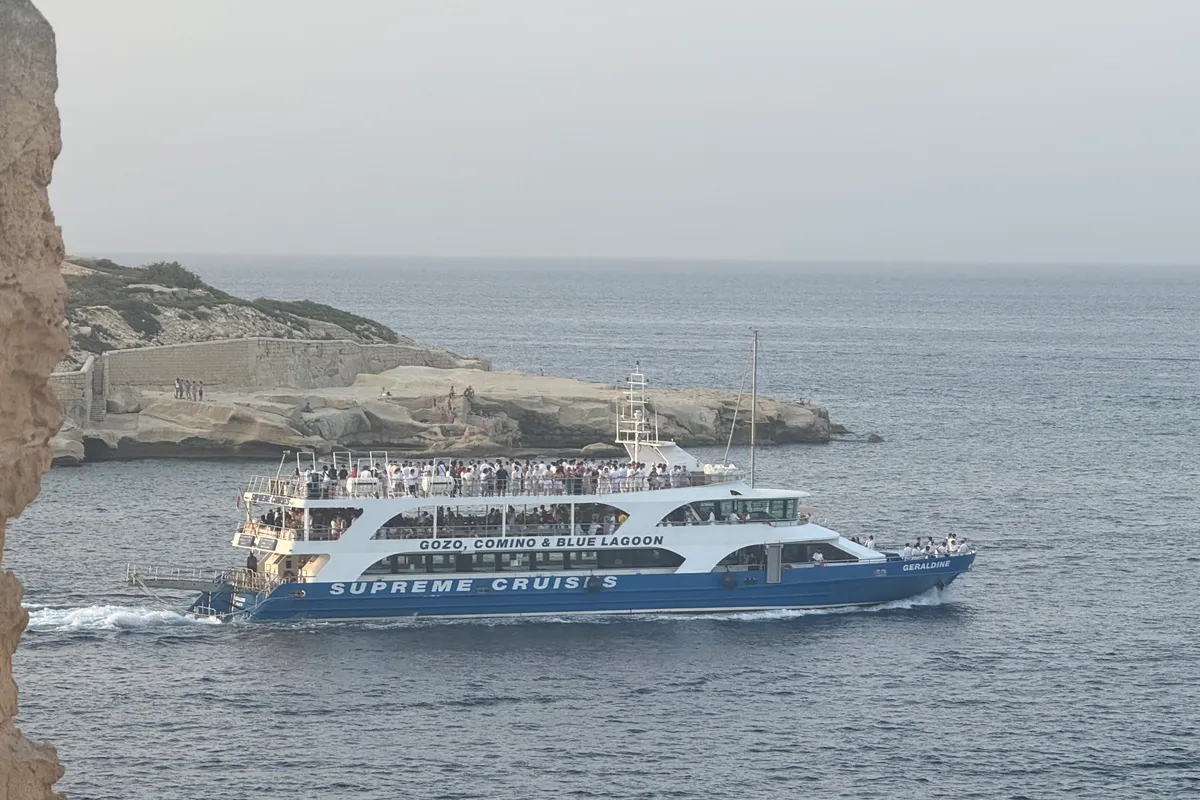
- Boat parties start. The Pukka Up boat party, the big commercial one, runs every Saturday from June to September: departs Sliema Ferries at 19:00, about five hours on the water with an open bar, roughly £50 a head (they're a UK brand and price in sterling). It's exactly what you imagine, sunset over the coastline included, and whether that's heaven or hell depends entirely on you.
- Pool parties start. Hugo's Infinity in St Julian's kicks off its weekly programme: White Party on Mondays, a French-themed night on Wednesdays, Moonlight Fridays, the over-21 Black Jack party on Saturdays (€25-35 entry) and Beach Sundays. Café Del Mar in St Paul's Bay begins its big themed events too, with capacity for up to 4,000 people and tickets around the £40 mark for headline nights; go for sunset, that's the whole point of the venue.
- Festa season hits its dense stretch from mid-June onward, meaning free fireworks and street parties most weekends through late August.
Weather: highs around 28°C, sea around 23-24°C, rain effectively finished until autumn. Crowds build all month as the language schools fill up.
My verdict: late June is arguably the sweet spot of the whole summer. Everything is open, the heat hasn't peaked, and prices haven't fully peaked either.
July: Peak Season, Part One
July is Malta at full volume, and the month has an anchor event that shapes everything around it.
Isle of MTV is Europe's biggest free music festival, held at Il-Fosos Square (The Granaries) in Floriana, with a crowd around 30,000. In 2026 it falls on Wednesday 22 July, with Katy Perry headlining alongside Afrojack and Maltese artist AIDAN. It's free but you register for entry at isleofmtv.com, and you should do it early because registration fills. The show itself is a big pop-and-EDM production under a warm sky, and even if the lineup isn't your taste, the atmosphere in Floriana and Valletta that night is worth being there for.
The smarter reason to time a trip around it is Malta Music Week, the run of official club nights, pool sessions and beach parties across the island in the days around the main show (22-26 July in 2026). Venues that are already good become very good that week, and the whole island's nightlife infrastructure operates at maximum.
Beyond the MTV week, July is the full weekly rhythm: Pukka Up every Saturday, Hugo's Infinity pool parties nearly every day of the week, Café Del Mar's big themed Saturdays, ABODE's On The Rock pool party series (the UK house brand runs its Malta residency at Café Del Mar across the summer), open-air rooms at Gianpula and Uno, and festas throwing fireworks over some village or other every single weekend. Hugo's also rolls out its Neon Pool Party special editions in July and August. For venue-by-venue picks in all this noise, my rundown of the best clubs in Malta sorts the genuinely good rooms from the tourist traps.
Weather reality: highs around 31°C, nights in the mid-20s, zero rain, sea at 26°C. Perfect for everything outdoor, sweaty for anything indoor without serious air conditioning. Crowds are heavy: Paceville on a Friday is shoulder-to-shoulder, and the student groups are at full strength.
My verdict: if you want the biggest possible version of Malta nightlife and don't mind sharing it with everyone else who does, July is your month. Book accommodation months ahead, not weeks.
August: Peak Season, Part Two (Hotter, Heavier)
August is July with the dial turned further: hotter, more crowded, more expensive, and home to the best electronic music event of the Maltese year.
Glitch Festival is the serious one. It's Malta's techno and electronic flagship, held at Gianpula Village, and the 2026 edition marks its tenth anniversary: 12-15 August, four days, 65-plus artists including Amelie Lens, Ben Klock, Rødhåd, Mall Grab, KI/KI and Chris Stussy, with a 4-day pass at around €159. It draws a proper international crowd, the kind of people who fly in for the lineup rather than the beach, and the afterparty ecosystem around it (boat parties, Uno club nights) makes that week the strongest stretch of the summer for anyone into electronic music. Passes sell in tiers and the cheap ones go early.
Glitch also sits deliberately next to Santa Marija on 15 August, the biggest festa date of the year, when seven parishes celebrate at once and the whole island takes a public holiday. The fireworks that week are relentless in the best way. Mid-August in Malta is a national party whether you bought a ticket or not.
Everything from July continues: boat parties, the full Hugo's and Café Del Mar programmes, ABODE pool parties, Toy Room's themed nights for the Paceville crowd. The practical warnings are real though. Daytime highs hit 31-32°C and can spike higher, humidity is at its worst, and the island is at maximum occupancy: Santa Marija week is when Maltese families take holidays too, so ferries, beaches and restaurants are all full. Nightlife itself barely suffers because everything worth doing starts after 22:00 anyway, but daytime recovery between nights out is genuinely harder in August heat.
My verdict: the best month if Glitch is your thing, and a great month regardless, but it's the one where poor planning punishes you. Book everything early, pay the air-conditioning premium on your room, and don't schedule a hike.
September: The Insider's Month
September is the month I recommend to friends more than any other, because you get about 85% of peak season with about 60% of the people.
The sea is at its warmest of the whole year, around 25-26°C, often warmer than in June. Daytime highs ease back to 27-28°C, evenings turn pleasant instead of oppressive, and the first rain of autumn usually holds off until mid or late month. Meanwhile the summer machine keeps running: Pukka Up's Saturday boat parties continue through September, Hugo's and Café Del Mar keep their programmes going into the month, and the open-air clubs stay open while the weather holds.
The student season ends abruptly when European schools restart, which transforms Paceville almost overnight in the first week of September. The crowd ages up, queues shorten, and the whole strip becomes more pleasant. Festa season winds down with the Victory Day feasts on 8 September (Senglea, Naxxar, Mellieħa), which double as a national holiday with the traditional regatta in the Grand Harbour, one last big fireworks weekend before the villages go quiet.
Prices drop too: flights and rooms fall noticeably after the first week, and by late September you're paying shoulder-season rates for summer weather. It's also the best month to pair partying with actual daytime activities, because a Comino swim or a beach day at 27°C beats the same outing at 32°C every time.
My verdict: best overall month. If someone gave me one week per year for Malta nightlife plus everything else the island does, I'd take the second week of September without hesitating.
October: The Last Flare
October is Malta's autumn gamble, and how it plays out depends heavily on which half of the month you catch.
Early October can be glorious: highs around 25°C, sea still at 23-24°C, and the tail end of the outdoor season limping on when the forecast allows. The signature event is Notte Bianca, Valletta's all-night arts festival, held on the first Saturday of October (3 October in 2026). The whole capital stays open past midnight, museums and state palaces throw their doors open for free, streets fill with stages, and the bars do their biggest night between summer and New Year. Full details sit on visitmalta.com. It's not clubbing, but it's the best single night out of the autumn and it's completely free.
By late October the switch has flipped. The boat parties are done, the pool venues have closed, the first proper storms have arrived, and the scene has retreated to its winter core of Paceville, Liquid and the Valletta bars. Google "malta nightlife october" and you'll find plenty of pages pretending the summer scene is still running; it isn't, and you should plan a late-October trip as an indoor-nightlife trip with bonus warm afternoons.
Crowds are light, prices are low, and like April, this is a month locals rate far higher than the tourist calendar suggests.
My verdict: early October with Notte Bianca, genuinely good. Late October, manage your expectations.
November: Hibernation Begins
November is the quietest stretch after January. The clocks have gone back, the storms come through in earnest, and highs settle around 20-21°C with cool, sometimes wet evenings.
What's on is the winter pattern: Paceville Fridays and Saturdays, Liquid's techno calendar (which honestly gets more interesting in winter, when the bookings aim at residents rather than tourists), Toy Room's themed nights, and Valletta's bar scene, which absorbs most of my own November evenings. Django Jazz Bar and the Bridge Bar sessions are at their best when the summer crowds are a memory.
There's no headline event, no festival, no reason to fly in for nightlife specifically. If you're here anyway, the weekends still deliver a decent night out at winter prices, with free or cheap club entry and no queues.
My verdict: a residents' month. Enjoyable if Malta is home, skippable if it isn't.
December: A Real Finish to the Year
December surprises people. It's not party season, but it's far livelier than November because the island leans hard into Christmas and New Year.
Valletta gets dressed up properly: lights down Republic Street, a village-style Christmas market, carol events, and busy bars every weekend of the month as the Maltese Christmas-party season (every office on the island books a dinner) fills restaurants and spills into the clubs afterwards. Paceville does steady December trade, and the themed nights keep rolling.
The peak is New Year's Eve in Valletta. The national celebration in St George's Square is free and open to everyone, with live acts through the evening, a headline international performance around midnight (John Newman saw in 2026), and a big aerial fireworks display over the Grand Harbour. The Valletta Cultural Agency publishes each year's programme. It's genuinely good, the setting is unbeatable, and standing in a baroque square at midnight with fireworks over the harbour is a proper way to end a year. The clubs then run their own ticketed NYE parties, which are the most expensive nights of the winter (expect €30-60 entry with a drink or two included, more for TwentyTwo's rooftop, which usually stages one of its big themed events like the White Party or Las Vegas Night around the season).
Weather: highs around 17°C, cold by Maltese standards, rain likely at some point in any given week. Everything is indoors except the fireworks.
My verdict: the best winter month by a distance. A 29 December to 2 January trip built around Valletta NYE plus a Paceville night is a legitimately good winter city break.
The Whole Year at a Glance
| Month | Scene level | Signature events | Verdict |
|---|---|---|---|
| January | Very low | Nothing headline; indoor bars and weekend clubs | Skip for nightlife |
| February | Low, one big spike | Carnival (Valletta + Nadur), TwentyTwo Carnival Party | Come for Carnival week only |
| March | Low | Toy Room themed nights, Liquid club nights | Residents' month |
| April | Building | First village festas, Easter weekend, rooftop season starts | Smart quiet pick |
| May | Moderate | Festas most weekends, beach bars open, Gianpula outdoor rooms start | Best value of the first half |
| June | High | Earth Garden, boat and pool parties launch, festa season densest stretch begins | Sweet spot: everything open, not yet peak crowds |
| July | Peak | Isle of MTV + Malta Music Week, weekly boat/pool parties, festas every weekend | Maximum scale, maximum crowds |
| August | Peak | Glitch Festival, Santa Marija (15 Aug), ABODE On The Rock, Neon pool parties | Best for electronic music; hottest and busiest |
| September | High | Boat/pool parties continue, Victory Day festas (8 Sep), warmest sea | Best overall month |
| October | Moderate then low | Notte Bianca (early Oct), last open-air events | Good early, quiet late |
| November | Very low | Winter club calendar only | Skippable for visitors |
| December | Moderate | Valletta NYE, Christmas party season, club NYE events | Best winter month |
Best Month For...
Clubbing at maximum scale: July. Isle of MTV week puts every venue on its best behaviour, and the weekly boat and pool party rotation is in full swing.
Festivals: August for Glitch if you're into techno and house; early June for Earth Garden if you want the alternative open-air version; mid-July for the free pop spectacle of Isle of MTV.
Budget: May or late September. Warm evenings, open venues, shoulder-season flights and rooms, and entry prices that haven't peaked. February deserves a mention purely because Carnival is free.
Avoiding crowds while still having a scene: September, every time. The students leave in the first week and everything stays open. April is the spring equivalent, minus the boat parties.
A winter trip that still delivers: the week around New Year's Eve, or Carnival in February. Those are the two winter windows where Malta actually puts on a show.
Electronic music specifically: mid-August (Glitch) or, counterintuitively, deep winter at Liquid, when the bookings cater to the resident crowd rather than tourists.
Planning Tips: What to Book and When
A few things I've learned the annoying way:
- Glitch passes sell in price tiers from months out. If you're even 70% sure you're going, buy at the tier that's live; the 2026 4-day pass at ~€159 was the mid-tier, and prices only go up. Check glitchfestival.com once the lineup drops in spring.
- Isle of MTV registration is free but capped. Register as soon as it opens rather than assuming a free event means you can stroll in.
- July and August accommodation in Sliema and St Julian's needs booking two to three months ahead, more for Santa Marija week and Glitch week. September needs far less lead time and costs less.
- Boat parties sell out on peak Saturdays. Book the Pukka Up boat a couple of weeks ahead in July and August; in June and September you can often decide the same week.
- Don't over-schedule August days. Two big nights in a row at 31°C with a 10:00 checkout between them is a rookie itinerary. Build in a slow beach day, or use the recovery day for a Blue Lagoon trip where the hardest thing you'll do is swim to the kiosk.
- Budget realistically: club entry runs free to €20 most of the year (more for special events), beers €5-7, cocktails €10-15. A big Saturday in peak season with a pool party, dinner and a club is comfortably a €100+ day.
- Check the festa calendar for your dates. A village feast within taxi distance is a free, brilliant addition to any summer weekend, and most visitors never find out one was happening two kilometres away.
One last thing on Lost & Found, because people still ask: Annie Mac's festival, which put Malta on the international clubbing map from 2015, hasn't run since 2022 and no new dates have been announced. If a booking site tries to sell you on it, treat that as a red flag about the rest of their information too. Glitch has comfortably inherited its crown.
If this month-by-month view has you narrowing down dates, the full Malta nightlife guide goes deeper on the venues, districts and unwritten rules of going out here, and the best clubs in Malta list covers exactly where to spend those peak-season nights. Whichever month you land in, remember the golden rule of this island: the summer scene is for the tourists, the winter scene is for the rest of us, and both are better than the other side thinks.
Written byVincent Ventalon
French software engineer living in St Julian's and running his company from Malta. This site is what I learned on the way.More about me