Maltese Food 2026: Traditional Dishes, What to Eat & Where
Updated
21 min read
Traditional Maltese food is hearty, Mediterranean, and shaped by centuries of Sicilian, North African and British rule. The essentials to try: pastizzi pastries for around 50 cents, slow-cooked rabbit stew (the national dish), fresh fish at Marsaxlokk, baked pasta like timpana, and imqaret date sweets. Here is what to eat, where to eat it, and what it costs in 2026.
I have eaten my way across the island for years, from 2am pastizzerias to Sunday fish lunches in Marsaxlokk and a farmhouse fenkata in Gozo. The table below is the short version; the rest of the guide covers each dish, where to eat, groceries and drinks.
Maltese dishes at a glance
If you only remember a handful of names, make it these. Prices are typical 2026 restaurant or takeaway prices.
| Dish | What it is | Typical price | Where to try it |
|---|---|---|---|
| Pastizzi | Flaky pastry with ricotta or pea filling | 0.50-1 EUR each | Crystal Palace, Rabat |
| Stuffat tal-fenek | Rabbit stew with spaghetti (national dish) | 25-45 EUR (full meal) | Diar il-Bniet, Dingli |
| Hobz biz-zejt | Maltese bread with tomato, oil and toppings | 5-8 EUR | Fontanella Tea Garden, Mdina |
| Ftira | Round sourdough flatbread, often topped | 6-10 EUR | Maxokk Bakery, Nadur (Gozo) |
| Timpana | Baked macaroni wrapped in pastry | 8-14 EUR portion | Most traditional restaurants |
| Aljotta | Garlicky Maltese fish soup | 8-12 EUR | Marsaxlokk waterfront, Sundays |
| Bragioli | Beef olives braised in tomato sauce | 14-20 EUR | Traditional Maltese kitchens |
| Imqaret | Deep-fried date pastries | 1-2 EUR each | Festa stalls, eaten hot |
Now the detail, starting with the food you will eat most.
Traditional Maltese dishes you need to try
Maltese cuisine is the product of an island sitting in the middle of the Mediterranean, conquered and influenced by nearly everyone who ever sailed past. There is Sicilian DNA in the pasta, North African echoes in the spices, British influence in the love of pies and pastries, and a stubbornly Maltese way of doing things regardless.
Pastizzi: the unofficial national snack
Pastizzi are to Malta what the croissant is to France, except they cost a fraction of the price and turn up at any hour of the day or night. A pastizzi is a diamond-shaped pastry made from layers of flaky, phyllo-style dough, filled with either ricotta (rikotta) or mushy peas (piżelli). Two fillings, and yet this simple choice divides the whole country into two camps. You are either a ricotta person or a pea person, with no neutral ground.
I will state my position: ricotta wins. The salty, slightly grainy cheese against the shattering pastry is close to perfect. The pea version is warm and savoury and fine, but it does not hit the same way. That opinion has probably alienated half the island, and I can live with it.
For the best of them, the pilgrimage is to Crystal Palace (also written Is-Serkin) in Rabat, a cash-only hole in the wall that has been feeding locals and taxi drivers around the clock for decades. The pastry is consistently golden and not too greasy, the turnover is so high that yours came out of the oven minutes ago, and there is almost always a small crowd on the pavement outside. Pastizzi run about 0.50 EUR each, sometimes up to 1 EUR at fancier cafes, and you will eat at least three. One warning drawn from the reviews: a few spots try charging tourists silly prices, so if someone quotes you several euros for a single pastizzi, walk out. The going rate is cents, not euros.
Here is the real secret though: even a mediocre pastizzi is still good. Stumbling into a pastizzeria after a night in Paceville and demolishing four of them for a couple of euros is one of the island's small, reliable pleasures. The quality floor is high.
Fenkata: the rabbit feast that is Malta's national dish
If pastizzi are the everyday snack, rabbit is the ceremonial main event, and it is the dish Maltese people will name if you ask what their national food is. Fenkata literally means "a rabbit thing," the whole experience of gathering with friends or family and eating rabbit in serious quantities. Under the Knights of St John, hunting rabbit was restricted, so when the restrictions eventually loosened the Maltese threw themselves into eating it as a kind of culinary defiance, and the enthusiasm never faded.
There are two main preparations. Stuffat tal-fenek is rabbit slow-cooked in a rich tomato and red wine sauce with garlic and bay, the meat falling off the bone, served with spaghetti tossed in the same sauce (the pasta course almost steals the show). Fenek moqli is rabbit marinated in garlic and wine then fried until crisp outside and tender within, served with chips.
For the full experience, Diar il-Bniet in Dingli is a farmhouse restaurant cooking traditional recipes with produce from their own fields, and the rabbit stew there is the best I have had on the island. Book ahead on weekends and budget roughly 25-35 EUR a head with wine. Ta' Marija in Mosta does big, slightly chaotic Maltese feasts with live folklore nights, touristy but authentic and generous, around 35-45 EUR with the show. In Gozo, Ta' Rikardu up in the Citadella serves rabbit in a cosy, casual room for about 20-25 EUR. And during summer festa season many villages set up outdoor kitchens where rabbit is the star, cooked by people who have made it their whole lives. If you are heading over for the day, pair it with my Gozo guide.
Ftira and hobz biz-zejt: Malta's bread culture
Every Mediterranean country has its signature bread, and Malta's is the ftira, a round, flat sourdough with a chewy middle and a crust that means business. Gozitan ftira in particular is famous, thick and topped with tomatoes, onions, olives, capers and sometimes tuna or anchovies, essentially a Maltese ancestor of pizza. For the real thing, Maxokk Bakery in Nadur, Gozo, still bakes it in traditional wood-fired ovens, and the result is something no industrial bakery can copy.
The everyday hero, though, is hobz biz-zejt (bread with oil), Malta's answer to pan con tomate. You take a round of crusty Maltese hobz, rub it with ripe tomato until the bread turns red, drizzle it generously with olive oil, then pile on capers, olives, onion, tuna, sun-dried tomato, fresh basil and sometimes bigilla (broad bean paste). Simple, and exactly what Maltese people have eaten for lunch for centuries. Most cafes and bars serve it for around 5-8 EUR, and some let you build your own from a spread of toppings. My reliable spot is Fontanella Tea Garden in Mdina: touristy, yes, but the version eaten on the bastions with the whole island laid out below is hard to argue with.
Timpana and ross il-forn: the baked carb bombs
Timpana is what happens when you wrap a baked pasta dish in puff pastry, because why not. Macaroni is mixed with a rich meat sauce (minced beef or pork, bolognese-style), hard-boiled egg and sometimes bacon, encased in golden pastry and baked until it all melds into one glorious carb bomb. It is heavy in the best way. One slice and your afternoon plans are quietly cancelled. You will find it at most traditional restaurants, but it is at its best when somebody's nanna makes it, so if you ever get invited to a Maltese family lunch, eat it, then eat a second slice.
Its less famous sibling is ross il-forn, baked rice in the same sort of meat-and-egg sauce, forming a crisp top layer over a creamy, savoury middle. I might like it even more than timpana. Every family swears their version is the definitive one, and they are all wrong, because they are all good.
Bragioli, aljotta and the rest
Bragioli (Maltese beef olives) have nothing to do with olives. They are thin slices of beef rolled around a stuffing of breadcrumbs, parsley, garlic, bacon and hard-boiled egg, then braised in tomato sauce until tender, closer to a Mediterranean roulade. Good ones are deeply satisfying; the difference between good and tough is entirely in the cooking time, so order them where the kitchen takes traditional food seriously.
Aljotta is Malta's fish soup and one of its most underrated dishes: a light, tomato-based broth loaded with fresh fish, garlic and marjoram (a distinctly Maltese touch), sometimes with rice. It is not trying to be bouillabaisse. It is fisherman's food, best eaten with a chunk of hobz to mop the bowl. The best I have had came from a small waterfront place in Marsaxlokk on a Sunday, made with whatever the boats brought in that morning, which is exactly how to order it: if the waiter says the fish soup is good today, that is your answer.
The sweet stuff: Maltese desserts
Maltese desserts lean on dates, almonds and honey, the North African and Middle Eastern influence coming through clearly. Imqaret are deep-fried, diamond-shaped date pastries, phenomenal when they come to you hot from festa stalls or street kitchens, sad when they have been sitting cold in a tourist-shop tray. Freshness is everything. Kannoli, imported from Sicily and fully adopted, are crisp fried tubes filled with sweet ricotta, best when filled to order so the shell stays crunchy. Helwa tat-Tork is a dense tahini-and-almond halva sold in slabs, an acquired, chalky-sweet taste that I like in small doses with coffee. And qaghaq tal-ghasel (honey rings) are treacle-filled pastry rings scented with anise and citrus, associated with Christmas but around much of the year. Try one, at least once.
Eating out in Malta: fine dining to street food
Malta's restaurant scene has changed beyond recognition in the last decade, going from hotel dining rooms and village trattorias to something genuinely exciting, with Michelin tables at one end and hole-in-the-wall street food at the other. Average quality has climbed. So have the number of tourist traps charging inflated prices for mediocre food, so knowing where to eat matters. Restaurants do open and close, so treat any specific name here as a starting point and check it is still going before you make a special trip.
Fine dining, and why it is a relative bargain
For an island this size, Malta punches well above its weight at the top end. In the 2025 Michelin Guide, ION Harbour by Simon Rogan in Valletta holds two stars, the only two-star restaurant in the country, with a farm-to-table menu and a view over the Grand Harbour that alone is worth the booking. Five restaurants hold one star: Noni (chef Jonathan Brincat's modern Mediterranean, in a restored Valletta palazzo), Under Grain (creative Maltese cooking in an atmospheric underground room beneath the Rosselli hotel), de Mondion (French-Mediterranean fine dining inside medieval Mdina, with one of the most romantic terraces on the island), plus Rosamì and Fernando Gastrotheque.
Tasting menus at these run roughly 80-120 EUR a head, and here is the honest point: that is about half what an equivalent meal costs in London, Paris or Barcelona. If you enjoy fine dining, Malta lets you eat very well for the money. A star dinner in Valletta is one of the better-value splurges in Europe.
Casual dining: where you will eat most
This is where most of your eating out will happen. In Valletta, Nenu the Artisan Baker does rustic Maltese food (the ftira and rabbit are reliable) for about 15-25 EUR a head, and Legligin is a snug wine bar with excellent platters of local cheese, meats and dips paired with Maltese wine, around 20-30 EUR. In St Julian's, Piccolo Padre below Balluta Bay has been turning out some of the island's best pizza for years, always busy, about 12-18 EUR, which tells you what you need to know.
The one I send everyone to is Tal-Petut in Birgu, a tiny family-run place with no menu: you sit down, trust the chef, and eat whatever was good at the market that day. It is consistently excellent and feels like eating at a very talented friend's house. Only a handful of tables, so book. Budget 25-35 EUR a head. While you are in the Three Cities, it is worth building a whole afternoon around.
The Sunday Marsaxlokk experience
This one earns its own section. Every Sunday the fishing village of Marsaxlokk turns into a huge open-air market. Fishermen pull their painted luzzu boats up to the waterfront and sell whatever they landed that morning: swordfish, tuna, lampuki (in season, roughly late August to December), octopus, squid and more. The market gets going around 7am and the best fish is gone by 10, but even arriving later the atmosphere is worth the trip. Browse the stalls, then take a table at one of the waterfront restaurants and order whatever they recommend, usually the grilled swordfish or a whole fish for two, around 18-30 EUR a head. Fish that was swimming a few hours ago tastes like it.
One practical note: if you are driving to Marsaxlokk, arrive before 9am or parking becomes a genuine ordeal. Otherwise take the bus, which is free for residents and runs regularly from Valletta on Sundays.
Street food and quick bites
Beyond pastizzi, most pastizzerias also sell qassatat (round, ricotta or pea-filled pastries), sausage rolls and pizza slices, so a full snack lunch comes to 3-5 EUR. Bakeries and cafes do loaded hobz biz-zejt and ftira for 5-8 EUR. And Strait Street in Valletta, once the city's notorious red-light strip and now a run of bars and small kitchens, is a good place to wander and graze. The food trucks at the Ta' Qali crafts village market on weekends are usually solid too.
Grocery shopping in Malta: a survival guide
Grocery shopping here takes some recalibration if you are used to the giant supermarkets of the mainland or North America. Malta imports most of its food, so certain things cost more than you would expect, seasonal availability swings, and some products you took for granted simply are not sold here. Once you learn the system, and it is a system, you can eat well without wrecking your budget.
Where to shop for what
Malta has several supermarket chains, and the trick is using more than one. Pavi (and its siblings Pama and Pavi Qormi) is the solid mid-range weekly-shop option, well stocked and reasonably priced, with the Qormi branch a full hypermarket. Lidl is the budget-conscious expat's friend, same rotating stock and low prices as everywhere in Europe, with good own-brand products and hit-or-miss fresh produce, so check ripeness. Scott's is where you go for a specific craving from home, stocking a wider range of British, Italian, American and Asian imports than anywhere else, at a premium of roughly 20-40% on those goods, so use it for treats, not the everyday shop. Valyou works for bulk household goods, and smaller chains like Greens are handy for quick top-ups at slightly higher prices.
What common groceries cost in 2026
Here is what to expect at a typical supermarket. Everyday local staples are fine value; imported, organic and specialty items carry the premium.
| Item | Approximate price (EUR) |
|---|---|
| Milk (1 litre, fresh) | 1.10-1.40 |
| Bread (Maltese hobz loaf) | 1.50-2.50 |
| Eggs (dozen) | 2.80-3.50 |
| Chicken breast (1 kg) | 7.00-9.00 |
| Minced beef (500g) | 4.50-6.00 |
| Pasta (500g, decent brand) | 1.20-2.00 |
| Olive oil (1 litre, good) | 8.00-12.00 |
| Tomatoes (1 kg) | 2.50-4.00 |
| Local wine (bottle) | 4.00-8.00 |
| Cisk beer (6-pack) | 5.50-7.00 |
| Local goat cheeselet (gbejna) | 1.00-2.00 each |
For the full picture of monthly outgoings, the cost of living guide breaks down groceries against rent, transport and everything else.
Skip the supermarket produce aisle
For the best fruit and veg at the best prices, buy like a local. The fruit-and-vegetable trucks and hawker stalls that set up in most towns sell Maltese and Sicilian produce well under supermarket prices, and in season the quality is excellent. The Ta' Qali Farmers Market (Saturdays and some weekday mornings) is where farmers sell direct, with tomatoes that actually taste of tomatoes, seasonal fruit, herbs, honey and local cheese, usually 20-30% cheaper than supermarkets for better quality. The restored Is-Suq tal-Belt in Valletta is a more convenient, more expensive indoor market and food hall. And the Marsaxlokk Sunday market sells produce, capers and honey alongside the fish, though the non-fish stalls lean touristy.
What a food budget really looks like
Tracking my own spending over the years, and consistent with the site's cost of living figures, a single person cooking most meals spends about 300-400 EUR a month on groceries (a frugal shopper at Lidl and the markets can get down to 200-280 EUR), a couple 500-650 EUR, and a family of four 700-900 EUR. Eating out on top of that adds up fast: a casual dinner for two runs 35-55 EUR, a mid-range three-course dinner with wine 60-90 EUR, and a realistic dining-out habit is 120-200 EUR per person a month. The single biggest way to overspend is drink markups in restaurants, where a bottle of wine that costs 7 EUR in the supermarket lands on the list at 22-28 EUR.
What is in season: the Maltese food calendar
A lot of the best eating here is seasonal, because Malta grows and catches things at particular times of year and the price and quality follow. Learning the rhythm is one of the quiet upgrades of living here rather than visiting.
In spring the strawberries arrive, mostly grown around Mġarr, and they are the reason for the village's strawberry festival (Festa Frawli), usually held on a Sunday in spring, where the whole place turns strawberries into jam, milkshakes, tarts and more. Spring is also broad-bean and artichoke season, and the run-up to Easter brings figolli, flat almond-paste biscuits cut into shapes and iced, plus the chocolate-and-cocoa drink imbuljuta at the tail end of winter feasts.
Summer is the island at its most abundant: local tomatoes that make hobz biz-zejt sing, peppers, marrows, melons and figs, all cheap and everywhere from the vegetable trucks. It is also snail (bebbux) season, cooked in garlic and wine at old-school places, and the start of the festa circuit where rabbit and imqaret come out in force. Late summer into autumn is when the prickly pears ripen, the cactus fruit you see growing off every rubble wall, and the raw material for that bottle of bajtra.
Autumn brings the one every food-minded resident waits for: lampuki (dorado or mahi-mahi), which run from roughly late August to December. When they are in, a whole fresh fish costs only a handful of euros at the market, and lampuki pie (torta tal-lampuki, baked with spinach, cauliflower, olives and walnuts) appears on menus. Autumn is also citrus and pomegranate time, and the grape harvest for those tiny Maltese wine runs.
Winter is soup and stew weather, when aljotta, minestra (a thick vegetable soup) and slow-cooked rabbit make the most sense, and oranges and mandarins are at their best. Christmas brings qaghaq tal-ghasel (honey rings) and imbuljuta tal-qastan, a warm chestnut-and-cocoa drink sold at village feasts. If you shop and order with the calendar rather than against it, you eat better and spend less, which is exactly how the Maltese have always done it.
Wine, beer and drinks: the Maltese beverage scene
One of the quiet pleasures of moving here is discovering that this tiny island has a real, and genuinely good, wine and craft-beer culture. Most expats arrive knowing nothing about Maltese wine and leave as minor evangelists.
Maltese wine
Malta has made wine for thousands of years, since the Phoenicians grew grapes here, but the quality has only climbed into serious territory in the last two decades. Three producers cover most of what you will drink. Marsovin, the oldest and largest, spans everyday bottles at 4-7 EUR up to the excellent Primus red around 15-20 EUR. Delicata is the other big name, with drinkable everyday wines at 5-8 EUR and a stronger Grand Vin de Hauteville range above that. Meridiana is the boutique of the three, consistently the most refined, its Isis Chardonnay and Nexus Merlot both outstanding at 15-25 EUR.
The genuinely special bottles use Malta's two indigenous grapes, grown nowhere else. Gellewza is a light-to-medium red with bright acidity and red-berry notes, charming and food-friendly (serve it slightly chilled with grilled fish). Girgentina is a crisp, citrusy white built for a warm evening on the terrace with seafood. Both are made in tiny quantities, so a bottle of 100% Gellewza or Girgentina is a find worth ordering when you see it.
Craft beer and Cisk
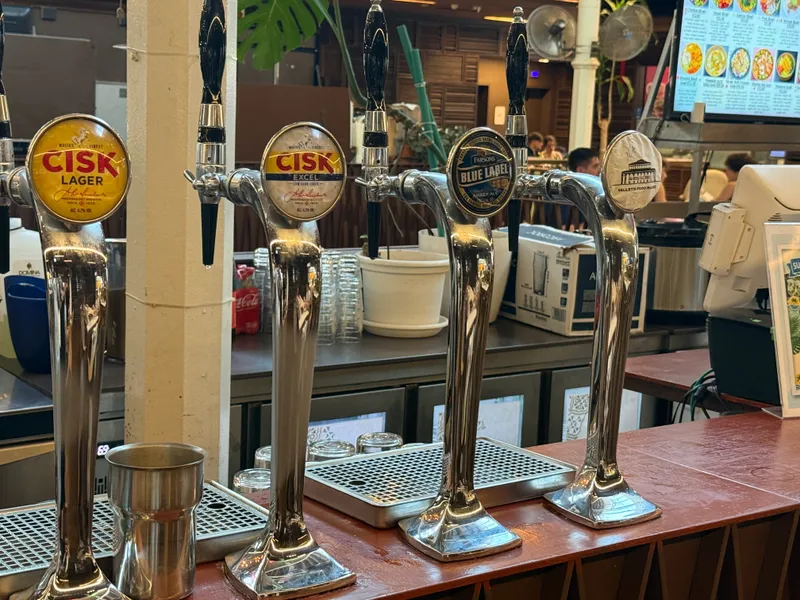
The default is Cisk, the inoffensive lager served ice-cold at every bar, kiosk and beach in the country, about 1.50-2 EUR in shops and 3-4 EUR out. Nothing to write home about, perfectly good on a hot day, and resistance is futile. The craft scene has grown up around it. Lord Chambray, based in Gozo, is the most prominent, and its pale ale is my everyday choice, hoppy and well balanced, roughly 3-4 EUR in shops and 5-6 EUR at bars. Newer breweries like Stretta push bolder, properly hoppy styles worth hunting down at craft bars in Valletta and Sliema.
Kinnie and bajtra: the two you have to try
If Malta had a national soft drink it would be Kinnie, a bittersweet, carbonated drink made from bitter oranges and aromatic herbs. The taste is hard to pin down, somewhere between Chinotto, bitter lemon and herbal tonic. It splits people cleanly: refreshingly unique, or tastes like cough medicine. I am firmly in the first camp. It works as a mixer (Kinnie and vodka is the unofficial national cocktail), pairs oddly well with Maltese food, and costs about 1-2 EUR a can. Give it three tries before you judge; the first sip confuses, the second intrigues, the third is where it gets you.
Bajtra is a liqueur made from prickly pears, the cactus fruit that grows everywhere here. It is sweet, faintly syrupy, bright pink-red, and best served ice-cold as an after-dinner digestif. Not a sophisticated drink, very much the kind of bottle you open on a rooftop with friends and somehow finish. It costs 8-15 EUR a bottle at any liquor or souvenir shop and makes a good gift to bring abroad.
Practical tips for eating in Malta
Tipping
Malta's tipping culture is relaxed, more present than northern Europe but nothing like the US. In restaurants, 5-10% is appreciated and not expected, and some places already add a 10% service charge (check the bill before adding more). Cafes and bars do not expect tips beyond rounding up. Nobody tips at a pastizzeria, and the idea is faintly comical.
Food delivery
For a lazy night, Malta is well served by Bolt Food and Wolt, both covering Sliema, St Julian's, Valletta, Gzira, Msida and the surrounding urban belt well, with delivery fees usually 1-3 EUR. Coverage thins outside that corridor and in rural areas or Gozo. Many smaller restaurants that are not on the apps will still deliver if you call them directly, so ask your neighbours which local places do.
Vegetarian and vegan
Malta was traditionally a meat-and-fish culture, but the plant-based scene has improved fast. A lot of traditional dishes are naturally vegetarian anyway, thanks to Malta's serious Catholic Lent tradition: ricotta pastizzi, hobz biz-zejt without the tuna, bigilla, gbejniet and plenty of vegetable soups and pasta. Dedicated spots like the plant-based cafes in Valletta cover the rest, and most mainstream restaurants now carry at least a couple of vegetarian options. Vegan is still slightly harder at old-school Maltese places, but it improves every year.
Meal timings
Timings are Mediterranean with a local twist. Breakfast is light, usually just coffee and a pastry or a pastizzi. Lunch runs roughly noon to 2pm and is still the traditional main meal, with Sunday lunch a major family event. Dinner is later, with restaurants filling from about 8pm, so eating before 7:30 often means having the room to yourself. And pastizzerias near the nightlife areas stay open into the early hours, which you will be grateful for eventually.
So what should you actually eat in Malta?
Maltese food will not win prizes for subtlety or for looking good on Instagram. What it offers instead is honest, generous, deeply flavoured cooking made by people who learned their recipes from their grandmothers and saw no reason to change them. The best meals I have had here were not the Michelin ones, good as those are. They were the four-hour family fenkata where someone's aunt would have been offended if I skipped seconds, the dusty village festa where rabbit came out of a pot over an open fire onto a plastic plate, and the 2am pastizzi that was somehow perfect.
So if you are new here, eat past the tourist menus. Order the aljotta when the waiter says it is good today. Buy Maltese sausage (zalzett tal-Malti), coriander-scented and about 3-5 EUR, and grill it at home to feel instantly more local. Take full advantage of lampuki season in autumn, when a whole fresh fish costs a handful of euros. Ask your Maltese colleagues where they actually eat, then go there. You moved to a Mediterranean island, so eat like it. If you are still finding your feet more broadly, the cost of living guide and the culture and history guide are good next stops.
Written byVincent Ventalon
French software engineer living in St Julian's and running his company from Malta. This site is what I learned on the way.More about me